Author: Pope Benedict XVI
Date: Friday, August 19, 2005
.
Dear Brothers and Sisters,
.
Psalm 130 presents the familiar theme of spiritual childhood. At its center we find the image of a young child peacefully resting in its mother’s arms. This scene is in marked contrast to the arrogant attitude depicted at the beginning of the Psalm; an attitude the believer rejects in favour of humble trust in the Lord. Far from being blind or automatic, such abandonment is a conscious, serene and mature entrustment of self to God.
.
Just as the conclusion of the Psalm invites all Israel to hope in the Lord, we too place our hope in the one who gathers us to himself and offers us certainty, peace and life. But heeding the words of John Cassian, a Christian writer who lived at the turn of the fifth century, we must guard against conceit which destroys all virtues and afflicts most especially the powerful.
.
Let us make the Psalmist’s words our own and turn to the Lord not with pride but in silence and peace.
Friday, August 19, 2005


Thursday, August 18, 2005
Find Christ in the Eucharist, Pope Tells Youth in Cologne
Thursday, August 18, 2005 12:00:00 AM GMT
.
Cologne, Aug. 18 (CWNews.com) - In his first address at World Youth Day in Cologne, Pope Benedict XVI (bio - news) told his youthful audience, "the happiness you have a right to enjoy has a name and a face: it is Jesus of Nazareth, hidden in the Eucharist."
.
The Holy Father made his first appearance at the WYD ceremonies abroad a boat, the RheinEnergie, floating in the Rhine, with thousands of WYD pilgrims assembled on the river's banks.
.
As the boat reached the site of the gathering, the Pope greeted young people who had come on board the boat, dressed in the traditional costumes of their native lands, to represent all the nations participating in the 20th WYD celebrations. Next there was reading of the passage from St. Matthew's Gospel that describes the voyage of the Magi-- whose relics are kept in the Cologne cathedral, and whose story furnished the motto of this year's WYD: "We have come to worship Him."
.
When Cardinal Karl Lehmann, the president of the German bishops' conference, formally welcomed the Pontiff to Cologne, the crowd on the shores burst into applause, and eventually a papal aide had to ask for quiet so that Benedict XVI could speak.
.
The Pope's speech was divided into five parts, which he delivered successively in German, English, French, Spanish, and Italian. He welcomed all the young people who had assembled in Cologne-- making a special point of recognizing those "who, like the Magi, have come from the East." He also recognized "those among you who have not been baptized, and those of you who do not yet know Christ or have not yet found a home in his Church." He urged all participants to open their hearts to "meet Christ, who is waiting for you."
.
As he arrived at WYD, the Pope said, he was mindful of the example set by Pope John Paul II (bio - news), "who had the inspired idea of calling young people from all over the world to join in celebrating Christ, the one Redeemer of the human race." This year, he continued, the world's youth are challenged by the example of the Magi, who persisted despite difficulties in their quest to find the Messiah. Today young people are also on a quest, the Pope remarked: a quest to discover meaning in life, and answers to their most profound questions.
.
Again like the Magi, Pope Benedict continued, young people will find their answeres in Christ. As the wise men felt awe upon meeting the Christ child, Christians should feel the awe of participation in the Eucharist, he said-- particularly during this Year of the Eucharist.
.
Concluding his talk, the Pope reverted to German, and said that he was proceeding to the cathedral to venerate the relics of the Magi. He reminded his young audience: "The relics of the saints are traces of that invisible but real presence which sheds light upon the shadows of the world and reveals the Kingdom of heaven in our midst."
.
This article courtesy of Catholic World News. To subscribe or for further information, contact subs@cwnews.com or visit www.cwnews.com
.
Cologne, Aug. 18 (CWNews.com) - In his first address at World Youth Day in Cologne, Pope Benedict XVI (bio - news) told his youthful audience, "the happiness you have a right to enjoy has a name and a face: it is Jesus of Nazareth, hidden in the Eucharist."
.
The Holy Father made his first appearance at the WYD ceremonies abroad a boat, the RheinEnergie, floating in the Rhine, with thousands of WYD pilgrims assembled on the river's banks.
.
As the boat reached the site of the gathering, the Pope greeted young people who had come on board the boat, dressed in the traditional costumes of their native lands, to represent all the nations participating in the 20th WYD celebrations. Next there was reading of the passage from St. Matthew's Gospel that describes the voyage of the Magi-- whose relics are kept in the Cologne cathedral, and whose story furnished the motto of this year's WYD: "We have come to worship Him."
.
When Cardinal Karl Lehmann, the president of the German bishops' conference, formally welcomed the Pontiff to Cologne, the crowd on the shores burst into applause, and eventually a papal aide had to ask for quiet so that Benedict XVI could speak.
.
The Pope's speech was divided into five parts, which he delivered successively in German, English, French, Spanish, and Italian. He welcomed all the young people who had assembled in Cologne-- making a special point of recognizing those "who, like the Magi, have come from the East." He also recognized "those among you who have not been baptized, and those of you who do not yet know Christ or have not yet found a home in his Church." He urged all participants to open their hearts to "meet Christ, who is waiting for you."
.
As he arrived at WYD, the Pope said, he was mindful of the example set by Pope John Paul II (bio - news), "who had the inspired idea of calling young people from all over the world to join in celebrating Christ, the one Redeemer of the human race." This year, he continued, the world's youth are challenged by the example of the Magi, who persisted despite difficulties in their quest to find the Messiah. Today young people are also on a quest, the Pope remarked: a quest to discover meaning in life, and answers to their most profound questions.
.
Again like the Magi, Pope Benedict continued, young people will find their answeres in Christ. As the wise men felt awe upon meeting the Christ child, Christians should feel the awe of participation in the Eucharist, he said-- particularly during this Year of the Eucharist.
.
Concluding his talk, the Pope reverted to German, and said that he was proceeding to the cathedral to venerate the relics of the Magi. He reminded his young audience: "The relics of the saints are traces of that invisible but real presence which sheds light upon the shadows of the world and reveals the Kingdom of heaven in our midst."
.
This article courtesy of Catholic World News. To subscribe or for further information, contact subs@cwnews.com or visit www.cwnews.com
Tuesday, August 16, 2005
Cologne Cardinal Says WYD for Youth, Not Aging Dissidents
Friday, August 12, 2005 12:00:00 AM GMT
.
Cologne, Germany, Aug. 12 (CNA/CWNews.com)
.
In an in interview on the preparations for World Youth Day, the hosting archbishop, Cardinal Joachim Meisner of Cologne, said the event is a gathering for young people, not for "the people of yesterday" such as dissident theologians Eugen Drewermann or Hans Kung.
.
In an interview granted to the Bonn newspaper General-Anzeiger , Cardinal Meisner noted that Hans Kung and Eugen Drewermann are not welcome at the event. "The entire event is oriented to be an encounter for young people and not for 'seniors'," he said.
.
"There is nothing for them (Kung and Drewermann) here, as young people are not interested in the silliness they fostered for so long. We don't need any Drewermann or Kung or anything else stale at WYD," Cardinal Meisner added.
.
Both Drewermann and Kung have criticized WYD, calling it "triumphalism," and a dissident group has hinted it might bring both theologians to a parallel event.
.
Cardinal Meisner also noted that the gathering in Cologne "will be the first to have the special presence of two Popes, one from above, and the other from here below in the world."
.
"I desire that all those who arrive here return home happier than when they came, and that we here are all happier and more satisfied afterwards than when we welcomed them in," he said.
.
This article courtesy of Catholic World News. To subscribe or for further information, contact subs@cwnews.com or visit www.cwnews.com
.
Cologne, Germany, Aug. 12 (CNA/CWNews.com)
.
In an in interview on the preparations for World Youth Day, the hosting archbishop, Cardinal Joachim Meisner of Cologne, said the event is a gathering for young people, not for "the people of yesterday" such as dissident theologians Eugen Drewermann or Hans Kung.
.
In an interview granted to the Bonn newspaper General-Anzeiger , Cardinal Meisner noted that Hans Kung and Eugen Drewermann are not welcome at the event. "The entire event is oriented to be an encounter for young people and not for 'seniors'," he said.
.
"There is nothing for them (Kung and Drewermann) here, as young people are not interested in the silliness they fostered for so long. We don't need any Drewermann or Kung or anything else stale at WYD," Cardinal Meisner added.
.
Both Drewermann and Kung have criticized WYD, calling it "triumphalism," and a dissident group has hinted it might bring both theologians to a parallel event.
.
Cardinal Meisner also noted that the gathering in Cologne "will be the first to have the special presence of two Popes, one from above, and the other from here below in the world."
.
"I desire that all those who arrive here return home happier than when they came, and that we here are all happier and more satisfied afterwards than when we welcomed them in," he said.
.
This article courtesy of Catholic World News. To subscribe or for further information, contact subs@cwnews.com or visit www.cwnews.com
Saturday, August 06, 2005
Attack on Israel Was Included in Papal Condemnation
Author: Vatican Information Service
Date: Wednesday, July 27, 2005
.
"Concerning the Israeli reaction to the fact that the Holy Father, in his Angelus of Sunday July 24, did not also mention Israel alongside other countries, it should be noted that Benedict XVI's words specifically referred to the attacks of 'these days.'
.
"It is surprising that the Holy Father's intention should have been thus groundlessly misinterpreted, it being well known that in numerous interventions the Church, the Magisterium of the Supreme Pontiffs, and most recently Pope Benedict XVI, have condemned all forms of terrorism, from whatever side it comes and against whomsoever it is directed.
.
"Obviously, the serious attack in Netanya two weeks ago, to which the Israeli comments refer, also falls under the general and unreserved condemnation of terrorism."
Date: Wednesday, July 27, 2005
.
"Concerning the Israeli reaction to the fact that the Holy Father, in his Angelus of Sunday July 24, did not also mention Israel alongside other countries, it should be noted that Benedict XVI's words specifically referred to the attacks of 'these days.'
.
"It is surprising that the Holy Father's intention should have been thus groundlessly misinterpreted, it being well known that in numerous interventions the Church, the Magisterium of the Supreme Pontiffs, and most recently Pope Benedict XVI, have condemned all forms of terrorism, from whatever side it comes and against whomsoever it is directed.
.
"Obviously, the serious attack in Netanya two weeks ago, to which the Israeli comments refer, also falls under the general and unreserved condemnation of terrorism."
Friday, August 05, 2005
DIVORCE AND REMARRIAGE, IN FUNDAMENTALIST TERMS
July 26, 2005
.
Dear Friend of Catholic Answers:
.
Some years ago I participated in debates with Bill Jackson, head of a Fundamentalist ministry called Christians Evangelizing Catholics. Our last debate was in 1993 in Denver, during World Youth Day. I devoted a chapter to Jackson in my first book, "Catholicism and Fundamentalism."Jackson appears to be in semi-retirement now. At his web site he provides what he terms a "personal testimony" on divorce and remarriage. He says:"My first wife, Norah, divorced me in February 1979 and remarried in March 1979. Before the divorce, I endeavored in every way possible to stop it, including refusing to sign the decree. "In November 1992 I married Lucy [his second wife]. She informed me in July 1995 that a divorce [from Jackson] had been finalized, although I wasn't notified by the court of a pending or completed divorce action. Again, I did not sign any divorce decree but, if it was done, it was unilateral."As of June 2003 [the time of his writing] Lucy has not, to my knowledge, remarried. I still consider myself bound to her and will continually be open to reconciliation as the Lord undertakes. If she responds to this reconciliation, I pray that I will be able to help her fulfill all of God's will in her life. If she doesn't respond, I pray I will be all I can be for Jesus."Jackson uses an eight-step argument when discussing divorce and remarriage. Let's see how that argument stacks up against Catholic teaching."
.
Dear Friend of Catholic Answers:
.
Some years ago I participated in debates with Bill Jackson, head of a Fundamentalist ministry called Christians Evangelizing Catholics. Our last debate was in 1993 in Denver, during World Youth Day. I devoted a chapter to Jackson in my first book, "Catholicism and Fundamentalism."Jackson appears to be in semi-retirement now. At his web site he provides what he terms a "personal testimony" on divorce and remarriage. He says:"My first wife, Norah, divorced me in February 1979 and remarried in March 1979. Before the divorce, I endeavored in every way possible to stop it, including refusing to sign the decree. "In November 1992 I married Lucy [his second wife]. She informed me in July 1995 that a divorce [from Jackson] had been finalized, although I wasn't notified by the court of a pending or completed divorce action. Again, I did not sign any divorce decree but, if it was done, it was unilateral."As of June 2003 [the time of his writing] Lucy has not, to my knowledge, remarried. I still consider myself bound to her and will continually be open to reconciliation as the Lord undertakes. If she responds to this reconciliation, I pray that I will be able to help her fulfill all of God's will in her life. If she doesn't respond, I pray I will be all I can be for Jesus."Jackson uses an eight-step argument when discussing divorce and remarriage. Let's see how that argument stacks up against Catholic teaching."
- Basic principle: It is not good for man to be alone (Gen. 2:18), assuming, of course, that any union be scripturally correct." Jackson does not explain what he means by "scripturally correct." He may have in mind what Fundamentalists call the "principle of separation," which is based on 2 Corinthians 6:14: "Do not be unequally yoked together with unbelievers." One might supplement this verse with 1 Corinthians 3:9: "Marry only in the Lord." To Fundamentalists of Jackson's stripe, this means not only that one should not marry a non-Christian but also that one should not marry the wrong sort of Christian. The wrong sort includes Catholics, whom Fundamentalists such as Jackson do not consider to be Christians at all, but also most Protestants."
- God's provision of marriage is meant to be a complete, life-long union (Gen. 2:24.)" So far as it goes, this is in accord with Catholic teaching, but the Church puts a different emphasis here. Not only is marriage "meant to be" indissoluble, it actually is indissoluble. Once a valid, sacramental marriage has been made, it cannot be undone. Jackson's phrasing leaves a distinction between what is meant to be and what is. He is getting ready to argue that sometimes what is meant to be does not pan out."
- It is possible for a man or woman, in disobedience to God, to contract a divorce (Matt. 5:32)."Here Jackson goes awry. If a Christian obtains a civil divorce, that does not end a true marriage--at least not in Catholic eyes. In Jackson's eyes, our Lord has provided an exception in Matthew 5:32. Jackson is relying on a translation that says "except for adultery," but such translations are erroneous.The New American Bible handles the passage fairly well. Its rendering is "unless the marriage is unlawful," and its notes say that our Lord was referring to a situation in which parties who were ineligible to marry (as when they are too closely related) attempted to marry anyway and held themselves out as being married.Other commentators say the apparent exception refers to situations in which couples cohabit or are in some other irregular state. In all these cases there would be no valid marriage, so the parties would be free to separate from one another. "
- While God hates divorce (Mal. 2:16), both the Hebrew and Greek words for divorce show it to entail an actual cessation of the married state--'keriythuwth,' a cutting (of the matrimonial bond); 'apolou,' to free fully."In Matthew 5 Jesus explains the leniency of the Mosaic Law and contrasts the perfected rule that will pertain under the New Covenant. Whether a divorce under the Mosaic Law effected "an actual cessation of the marital state" is immaterial now to the Christian. "
- A person who, against his will, is divorced is no more to be blamed than a man who, against his will, is murdered or robbed (1 Cor. 7:15)."Jackson is right here, but only in a limited sense. If one spouse walks out on the other, the spouse who is left behind is not guilty of the sin committed by the other. If one spouse seeks a civil divorce, the other is under no penalty of sin arising from that action. But Jackson persists in mistakenly thinking that a divorce ends a sacramental marriage."
- A person loosed from his wife is not to seek a wife (1 Cor. 7:27). Although he may be loosed by his partner, he is still bound to keep the wedding vows he made before man and God. He must love his wife until death. However, it would seem proper that if the party who divorces remarries, he is free from this obligation, for it is not right to love someone else's wife."There are multiple confusions here.In 1 Corinthians 7:27 Paul is talking about people choosing the best state through which to work out their religious lives. He recommends virginity (celibacy), but that does not apply to everyone. He asks, "Are you bound to a wife? Do not seek a separation." This means a man should not dump his wife out of misplaced zeal. He has a continuing duty toward her. Paul goes on to ask, in the same verse, "Are you free of a wife? Then do not look for a wife." Here he is talking to widowers and advising them to adopt a life of celibacy. Note that he is not commanding them not to remarry. Remarriage after the death of one's spouse is permissible.Jackson errs when he says that if a man's wife marries someone else, the man is free to marry also. This presumes that her remarriage dissolves the original marriage to him. Not so. Her remarriage is only an attempted remarriage. In fact she has entered into an adulterous relationship, not a new marriage, even if the justice of the peace says otherwise.When he says "it is not right to love someone else's wife," Jackson makes a double error. First, the woman remains the man's own wife. Her attempted remarriage has not changed that fact. Second, even if she abandons him, the man should continue to love her and pray for her. Jackson almost makes it seem as though the husband should cease caring about his wife if she goes astray."
- A person who, against his will, is divorced is scripturally free to remarry if the party who contracted the divorce remarries." Tellingly, Jackson provides no scriptural reference here--and rightly so, since there is none. Nowhere does our Lord say a man may take a new wife if he is abandoned by his original wife."
- While most see a scriptural reason for a person who has been divorced to refrain from the office of pastor and deacon, there is no Scripture to prohibit that person from continuing in an active role in ministry under the auspices of the local church. The person who contracted the divorce should seek forgiveness from God and restoration of the marriage if at all possible."
Bill Jackson has had two wives walk out on him. One remarried a month after she divorced him. The second divorced him without even letting him know she was doing so. One must empathize with him, but that empathy should not lead one to accept his misconstrual of Scripture. Our Lord did not say what Jackson imagines him to say about divorce and remarriage.
.
His own case highlights the kinds of problems that arise from a married pastorate or, in the Catholic analogue, a married priesthood. Should Jackson be debarred from serving as a minister in his denomination? I suppose he would not have brought up the issue unless some in his congregation had said that he should have stepped down because he was divorced, even though he was not to blame for the divorce.
.
When a moral problem occurs in one department of life, its effects may be seen in other departments. A minister's wife abandons him, and that affects his status as a minister. Similar things have happened when ministers' children have gone bad. "If a man can't keep control of his own household, why should he have control over our congregation?" It is an oft-heard question (although heard more often in years past, perhaps).
.
I wish Jackson well. He certainly is more principled than many of his co-religionists (and, sorry to say, many of mine). He knows divorce is wrong and believes he needs to maintain loyalty to his wife so long as she is his wife. He errs when he argues that divorce actually ends a marriage, but, at least in sentiment if not in theory, he is not all that far from the Catholic understanding.
KARL KEATING
Prayer in the Bible
The breadth and depth of prayer is shown to us from the Scriptures. Throughout the Bible story the heroes of faith have a communion with God that is intimate and real. From the very first story of Adam and Eve walking with God in the garden in the cool of the day we get a glimpse of the life of prayer. In the book of Genesis, prayer is likened to walking with God. Both Noah and Enoch were said to have "walked with God" (Genesis 5:24, 6:9). In the story of Abraham we see the great father of faith walking with God. He steps out in faith to follow God, and God establishes a covenant with him. Throughout Abraham’s story, prayer is shown to be a living relationship with God. It is established in the sacrifices of the covenant and fulfilled in the promises of the covenant. The Catechism of the Catholic Church puts it this way, "Christian prayer is a covenant relationship between God and man in Christ. It is the action of God and of man, springing forth from both the Holy Spirit and ourselves, wholly directed to the Father, in union with the human will of the Son of God made man."
.
In the story of Moses, other dimensions of prayer start to come alive. Moses fled to the wilderness, but God found him and called him through the burning bush (cf. Exodus 3:1-6). For Moses, prayer means not only seeking God but God seeking him. "The wonder of prayer is revealed beside the well where we come seeking water: there, Christ comes to meet every human being. It is he who first seeks us and asks us for a drink. Jesus thirsts. His asking arises from the depths of God’s desire for us." When God came to meet Moses at the burning bush, we are reminded that prayer is a gift from God. He first gives us the desire to pray, then enables us to pray. Therefore our prayer is always a response to God.
.
The burning bush is also an introduction to the "mystical" tradition of prayer. Within the mind there is a facility to apprehend a message from God given in a vivid and even frightening manner. When we speak of mystics in the Christian tradition, we don’t mean mystic fortune-tellers or mediums. Instead, the mystic is one who has had a close, unforgettable, and vivid experience of God’s presence. Like Moses, mystics have discovered how to listen to God as well as speak to him. Mysticism is linked with meditation, for in meditation we reflect on the Word of God and take that message to heart. Like Abraham, Moses’ meditation on God’s word took him further into an intimate relationship with God. God speaks to Moses face to face as a person speaks to a friend (cf. Exodus 33:11). It is from this intimacy with God that Moses becomes a great prayer warrior. He prays for Miriam’s healing (cf. Numbers 12:10-13), for victory over the Amalekites (cf. Exodus 17:8-13), and for God’s mercy in the face of the people’s apostasy (cf. Exodus 32)
Excerpt from: More Christianity by Dwight Longenecker
.
In the story of Moses, other dimensions of prayer start to come alive. Moses fled to the wilderness, but God found him and called him through the burning bush (cf. Exodus 3:1-6). For Moses, prayer means not only seeking God but God seeking him. "The wonder of prayer is revealed beside the well where we come seeking water: there, Christ comes to meet every human being. It is he who first seeks us and asks us for a drink. Jesus thirsts. His asking arises from the depths of God’s desire for us." When God came to meet Moses at the burning bush, we are reminded that prayer is a gift from God. He first gives us the desire to pray, then enables us to pray. Therefore our prayer is always a response to God.
.
The burning bush is also an introduction to the "mystical" tradition of prayer. Within the mind there is a facility to apprehend a message from God given in a vivid and even frightening manner. When we speak of mystics in the Christian tradition, we don’t mean mystic fortune-tellers or mediums. Instead, the mystic is one who has had a close, unforgettable, and vivid experience of God’s presence. Like Moses, mystics have discovered how to listen to God as well as speak to him. Mysticism is linked with meditation, for in meditation we reflect on the Word of God and take that message to heart. Like Abraham, Moses’ meditation on God’s word took him further into an intimate relationship with God. God speaks to Moses face to face as a person speaks to a friend (cf. Exodus 33:11). It is from this intimacy with God that Moses becomes a great prayer warrior. He prays for Miriam’s healing (cf. Numbers 12:10-13), for victory over the Amalekites (cf. Exodus 17:8-13), and for God’s mercy in the face of the people’s apostasy (cf. Exodus 32)
Excerpt from: More Christianity by Dwight Longenecker
Catholic Scientology?
Q. There has been much talk about Scientology on the TV since one of today's biggest stars, Tom Cruise, has been so gung-ho about the topic. I recently saw a newscaster talk about Tom’s fiancée, Katie becoming a Scientologist, having been raised a Catholic. The newscaster reported that Katie can in fact be a Scientologist and still remain Catholic. I don’t believe they are correct, but not knowing anything about Scientology, I can’t refute their claims. What are we to say when someone asks us about the topic?
Name withheld by request
.
Name withheld by request
.
A. You are correct. The differences between Scientology and the Catholic faith are profound and irreconcilable, and anyone who sincerely claims to adhere to both religions has somehow failed to grasp those differences. Here are just a few of the most important contradictions:
- The Catholic faith teaches that Jesus Christ is God incarnate, the second Person of the Most Holy Trinity, who founded our Church two thousand years ago. Contradicting that central, indispensable article of Catholic faith, L. Ron Hubbard—the twentieth-century science fiction writer who founded Scientology in the 1950s—taught that Christ is an “illusion” implanted in humans to deceive us.
- The Catholic faith holds the Bible to be Scripture, inspired by God. The Church of Scientology holds as its scripture the writings of Hubbard.
- The Catholic faith teaches that the human race is fallen and in need of divine forgiveness and redemption. Through Jesus Christ we can be saved by God’s grace, a salvation that necessitates our repentance and conversion. Scientology, on the other hand, does not call its followers to seek God’s grace as repentant sinners, trusting in the redemption of Christ. Rather, much like the ancient Gnostic heresies, it teaches a self-help technique of personal improvement, based on its claim to offer enlightenment. This alleged “enlightenment” comes from the writings of Hubbard.
- The Catholic faith teaches that the worship of God, our loving Creator, is the joyful duty of every human being. Scientology teaches, as its official website declares, that God is not to be worshiped.
- Scientology teaches reincarnation, a notion the Catholic faith firmly rejects as false.
- Like the ancient Gnostic heresies, Scientology has an elaborate and exotic mythology that contradicts Catholic teaching about the nature of humankind and its spiritual predicament. Based on the ideas of Hubbard, the Church of Scientology teaches that about 75 million years ago, an evil intergalactic warlord called Xenu rounded up the inhabitants of various planets, massacred them and brought them to earth. The “thetans” of these extraterrestrials (in this mythology, a “thetan” is similar to a soul) are malicious and now fester within the bodies of human beings, from which they must be summoned out.
Given these essential differences between the Catholic faith and Scientology (there are other differences as well), it should be clear that a person cannot sincerely hold to both religions without engaging in extensive self-contradiction. So Catholics should be skeptical of any claims that Scientology would somehow enhance or supplement their faith.
— Paul Thigpen, Ph.D.
Prayer Intentions for August
Author: Vatican Information Service
Date: Monday, August 1, 2005
.
Pope Benedict's general prayer intention for the month of August is:
.
"That World Youth Day may inspire or reawaken in young people the desire to meet Christ and find in Him the guide of their own lives."
.
His mission intention is:
.
"That the priests, religious men and women, seminarians and laity from mission countries who are completing their formation in Rome, may find their stay in the 'Eternal City' a time of spiritual enrichment."
Thursday, August 04, 2005
As God Calls, He Also Equips
8/4/05
.
People are given the gifts they need to live out their calling. Look at St. Thomas Aquinas, St. Augustine, St. Maximilian Kolbe, and St. John Bosco. These individuals had the intellectual abilities and talents they needed in their vocations, even before they discerned their callings. As God calls, He also equips. The presence of particular gifts, therefore, is at times a helpful indication of what God has planned for an individual.
.
Look at the example the Father gives us through His own Son. Didn't Jesus have the power to achieve (humanly speaking) much more than He did while here on earth? Then why didn't He? Because the Father willed otherwise. God desired something much more than teaching and good works. Something hidden, something greater. He called for submission. The Father asked His Son to suffer. He asked for surrender. He asked for obedience. And this is the deepest aspect of any vocation — the giving up of one's own will to do the Will of God. And that's why the natural signs valued by human judgment cannot be the sole guidelines for making a decision to follow a particular vocation.
.
It frequently happens that young people put off answering God's call because of feelings of unworthiness and inadequacy. They believe that they lack the necessary gifts to answer God's call. Such people are placing too much emphasis on the importance of their own abilities and judgments.
.
When Moses was called, he also fell into this error. At first he questioned God, saying, "Who am I that I should go to Pharaoh?..."(Ex 3:11). A recognition of one's own unworthiness is a normal response, but Moses became doubtful about his calling. He said he would not be believed and he'd be called a liar. So God gave him adequate proofs such as the miraculous staff that he could show to the people. God told Moses to put his hand in his clothing and when Moses pulled it out, it was touched with leprosy. Moses then repeated the action and the leprosy vanished.
.
Moses then went further: "I am slow of speech and tongue" (Ex 4:10). So God told him not to worry, that He would take care of it when Moses was obliged to speak. God tried to convince Moses that His power would suffice and not to worry about inadequacies. Moses' response showed a lack of trust: "Please send another." Take note how God became angry with Moses because of his stubbornness. We must avoid putting God to the test by not having enough faith that He will give us what we need to do His work.
.
St. John Vianney had a terribly difficult struggle in his studies for the priesthood. He was ordained certainly not because of his good grades but because of his piety and ardent desire to help others. The bishop ordained him and sent him to the remotest corner of the diocese, where he thought he could do the least amount of damage among the uneducated people. St. John Vianney would go on to become one of the great saints of the 19th century. His holiness was recognized throughout the world and he saved countless souls. Even if academically he was a failure, who can doubt the wisdom of St. John Vianney about the things of God? It is a wisdom the world does not understand, and is given by God alone.
.
A free Vocation DVD to help young people find their vocation may be requested at www.vocationinfo.com. If you are looking for a vocation, or know a young person that God might be calling, please visit this website or call 866-276-9159.
.
Fr. Christopher Foeckler, M.J. is a Miles Jesu priest ordained by Pope John Paul II in 1986. He is a graduate of the Pontifical University of St. Thomas Aquinas in Rome (the Angelicum). Among his many apostolates, Fr. Foeckler is dedicated to hearing four hours of confessions daily at the Miles Jesu community center in Phoenix, AZ.
“I am consoled by the fact that the
Lord is able to work and act with
insufficient instruments and, above all,
I rely on your prayers.”
— Pope Benedict XVI on the Day of His Election
.
People are given the gifts they need to live out their calling. Look at St. Thomas Aquinas, St. Augustine, St. Maximilian Kolbe, and St. John Bosco. These individuals had the intellectual abilities and talents they needed in their vocations, even before they discerned their callings. As God calls, He also equips. The presence of particular gifts, therefore, is at times a helpful indication of what God has planned for an individual.
.
Look at the example the Father gives us through His own Son. Didn't Jesus have the power to achieve (humanly speaking) much more than He did while here on earth? Then why didn't He? Because the Father willed otherwise. God desired something much more than teaching and good works. Something hidden, something greater. He called for submission. The Father asked His Son to suffer. He asked for surrender. He asked for obedience. And this is the deepest aspect of any vocation — the giving up of one's own will to do the Will of God. And that's why the natural signs valued by human judgment cannot be the sole guidelines for making a decision to follow a particular vocation.
.
It frequently happens that young people put off answering God's call because of feelings of unworthiness and inadequacy. They believe that they lack the necessary gifts to answer God's call. Such people are placing too much emphasis on the importance of their own abilities and judgments.
.
When Moses was called, he also fell into this error. At first he questioned God, saying, "Who am I that I should go to Pharaoh?..."(Ex 3:11). A recognition of one's own unworthiness is a normal response, but Moses became doubtful about his calling. He said he would not be believed and he'd be called a liar. So God gave him adequate proofs such as the miraculous staff that he could show to the people. God told Moses to put his hand in his clothing and when Moses pulled it out, it was touched with leprosy. Moses then repeated the action and the leprosy vanished.
.
Moses then went further: "I am slow of speech and tongue" (Ex 4:10). So God told him not to worry, that He would take care of it when Moses was obliged to speak. God tried to convince Moses that His power would suffice and not to worry about inadequacies. Moses' response showed a lack of trust: "Please send another." Take note how God became angry with Moses because of his stubbornness. We must avoid putting God to the test by not having enough faith that He will give us what we need to do His work.
.
St. John Vianney had a terribly difficult struggle in his studies for the priesthood. He was ordained certainly not because of his good grades but because of his piety and ardent desire to help others. The bishop ordained him and sent him to the remotest corner of the diocese, where he thought he could do the least amount of damage among the uneducated people. St. John Vianney would go on to become one of the great saints of the 19th century. His holiness was recognized throughout the world and he saved countless souls. Even if academically he was a failure, who can doubt the wisdom of St. John Vianney about the things of God? It is a wisdom the world does not understand, and is given by God alone.
.
A free Vocation DVD to help young people find their vocation may be requested at www.vocationinfo.com. If you are looking for a vocation, or know a young person that God might be calling, please visit this website or call 866-276-9159.
.
Fr. Christopher Foeckler, M.J. is a Miles Jesu priest ordained by Pope John Paul II in 1986. He is a graduate of the Pontifical University of St. Thomas Aquinas in Rome (the Angelicum). Among his many apostolates, Fr. Foeckler is dedicated to hearing four hours of confessions daily at the Miles Jesu community center in Phoenix, AZ.
Communion for Divorced and Remarried Undermines Two Sacraments
8/4/05
VALLE D'AOSTA — In a speech to priests of the diocese in which he is vacationing, Pope Benedict XVI reiterated Catholic teaching that members of the flock who have been divorced and remarried are in an irregular situation regarding the sacraments and may not receive Communion.
.
The Catholic Church still holds that remarriage after divorce, though extremely common, is the moral equivalent of adultery, and so bars a person in such circumstances from receiving Communion.
.
“I would say that a particularly painful situation is that of those who were married in the Church, but were not really believers and did so just for tradition, and then finding themselves in a new, nonvalid marriage, convert, find the faith and feel excluded from the sacrament,” he said.
.
Protecting the feelings of people in such situations, however, is not held as sufficient reason to admit them to Communion. Calling modern marriage a sacrament that is frequently “celebrated without faith,” the Pope reiterated that for a priest to give Communion under such circumstances would only serve to further undermine the integrity of marriage.
.
“We know that the moment we give in out of love, we harm the sacrament itself, and its indissolubility appears weakened,” Pope Benedict said.
.
Pope Benedict cited the collapse of the moral order in the 1960s as the source of so much moral confusion in and out of the Church. He said the situation of the divorced and civilly remarried is one that is “particularly painful,” and commented that the situation is so difficult that he also suffered from it.
.
Pope Benedict said that even if divorced and civilly remarried Catholics cannot receive the Eucharist, they are part of the Church and are loved by Christ; and that suffering out of love for God and for the Church is “a noble suffering.”
.
While participating at Mass without receiving Communion is not optimal, he said, “it is not nothing; it is involvement in the mystery of the cross and resurrection of Christ.”
.
(This update courtesy of LifeSiteNews.com)
VALLE D'AOSTA — In a speech to priests of the diocese in which he is vacationing, Pope Benedict XVI reiterated Catholic teaching that members of the flock who have been divorced and remarried are in an irregular situation regarding the sacraments and may not receive Communion.
.
The Catholic Church still holds that remarriage after divorce, though extremely common, is the moral equivalent of adultery, and so bars a person in such circumstances from receiving Communion.
.
“I would say that a particularly painful situation is that of those who were married in the Church, but were not really believers and did so just for tradition, and then finding themselves in a new, nonvalid marriage, convert, find the faith and feel excluded from the sacrament,” he said.
.
Protecting the feelings of people in such situations, however, is not held as sufficient reason to admit them to Communion. Calling modern marriage a sacrament that is frequently “celebrated without faith,” the Pope reiterated that for a priest to give Communion under such circumstances would only serve to further undermine the integrity of marriage.
.
“We know that the moment we give in out of love, we harm the sacrament itself, and its indissolubility appears weakened,” Pope Benedict said.
.
Pope Benedict cited the collapse of the moral order in the 1960s as the source of so much moral confusion in and out of the Church. He said the situation of the divorced and civilly remarried is one that is “particularly painful,” and commented that the situation is so difficult that he also suffered from it.
.
Pope Benedict said that even if divorced and civilly remarried Catholics cannot receive the Eucharist, they are part of the Church and are loved by Christ; and that suffering out of love for God and for the Church is “a noble suffering.”
.
While participating at Mass without receiving Communion is not optimal, he said, “it is not nothing; it is involvement in the mystery of the cross and resurrection of Christ.”
.
(This update courtesy of LifeSiteNews.com)
How Mary Changed My Life
by Sr. Joseph Mary Maximilian, FTI
.
Other Articles by Sr. Joseph Mary Maximilian, FTI
.
I was once a liberal, feminist, cafeteria Catholic who went 19 years without confession. Now I am a Franciscan Tertiary of the Immaculate which is a strict and most faithful third order vocation. Living my Catholic faith is the joy and duty of every day of my life. Who got me from the one place to the other? Our Blessed Mother Mary did.
.
For reasons that I will never completely understand in this life, a grace was given to me some years ago. The grace from someone’s prayer must have been applied to my soul, because I never prayed myself. I could be active and even do charity work, and did, but I could not pray. I searched among different spiritual avenues and means, but found myself inexplicably drawn to Mary, Our Lady. I discovered particular messages of Our Lady at Fatima and elsewhere that found their way to my heart.
.
Let me take you back to my frame of mind: Do I need conversion? I had always been a Catholic so I do not need that. Prayer? Well, I can’t go for that but I will do an activity. Penance? That went out some years ago. Sacraments? I go to Mass almost every Sunday. Our Lady must have found something in there to work with, though.
.
Her messages would not leave my heart; they kept nagging me. The first change was when I began to pray and by that I mean literally one minute a day. In fact I had a little prayer book that was "One-Minute Meditations.” But that one minute was an opening in my hard heart and with that the lifeline to God that is prayer began to be established.
.
After some months, I was drawn to confession as well. After 19 years, I received once again that healing Sacrament of Reconciliation. Our Lady asks for monthly confession and I have been to the Sacrament monthly ever since — lately even more often. The layers around my heart and soul began to peel away. I could not have put a name to what I was experiencing at the time but I can now: conversion.
.
At the time of my re-conversion at the hands of Our Lady, I experienced a new zeal and consuming desire to learn all I could about the faith. I was particularly drawn to all things Marian. The book, True Devotion to the Blessed Virgin written by St. Louis de Montfort beckoned me. I was completely unfamiliar with Marian consecration before reading this book, but it struck a chord in my heart. I followed the 33-day preparation as set forth in the formula of St. Louis, then made my Total Consecration to Jesus through Mary on March 25, 1996. Almost immediately, Marian friends were put into my life. I began to wear my sign of consecration — the Brown Scapular. I still wear it at all times, removing it only to shower.
.
Since I was reading all I could get my hands on about Mary I found other treasures such as St. Alphonsus Liguori’s wonderful book, Glories of Mary and Fr. Garrigou-LaGrange's, The Mother of the Savior. Ultimately, I discovered St. Maximilian Kolbe and his beautiful Marian writings, and so made another consecration by his formula, and on August 15, 1996 I joined the Militia of the Immaculata (M.I.) that he had founded.
.
Having made my consecration to Mary and putting all that I am and have and do into her hands, more spiritual “adventures” were in store for me. Consecration to Mary is christocentric as Our Lady never keeps anything for herself, but it is her mission to bring souls to Christ. This would be a mission for me now as well.
.
Zeal for others to know Jesus and Mary and for them also to grow in faith became a desire in my heart. However, Our Lady had other steps for me to take first. In some sense she “introduced” me to her Son present in the most Blessed Sacrament. I found myself coordinator of hours of Adoration of the Blessed Sacrament in my parish and I had never even been to adoration myself! So I went for holy hours of adoration to see what that was all about. It was there that I truly fell in love. Never had I dreamed that such a thing would happen: that I would come to love Jesus in His Real Presence in such a way that to this day, it is Holy Mass and adoration that are first priority in my daily life. Prayer and the Holy Rosary also became a joy for me.
.
Still hungry to learn all I could of the holy Faith and about the saints who are such wonderful examples for us, I was more and more drawn to Franciscan saints. Already I had discovered St. Maximilian Kolbe and his love for the Immaculata, Mary. There were St. Francis and St. Padre Pio and a host of others. A little desire to be a Franciscan began to grow in my heart. When I encountered a person who was a Franciscan Tertiary of the Immaculate, I was immediately intrigued and desired to learn more. I sought information and learned that this order was a Franciscan path with a Rule of Life that was also strongly Eucharistic and Marian. St. Maximilian is a particular patron of this branch of the Franciscan tree. I had found a religious home!
.
As soon as I could, I began formation as an “isolate,” which is to say that I do not have a local community but my formation is carried out by readings and audio lessons. Presently I have been in formation for over 5 years and I am a professed Tertiary with a religious name, title and habit that I can wear for very special occasions. It is a very great joy to visit our friaries and I will have the opportunity to do so next month.
.
I have written of my spiritual journey, yet this vocation to a Franciscan and Marian Third Order, as wonderful as it is, is still a secondary vocation. Marriage is my first and primary vocation and this too has been enriched by my Marian Consecration. I say this because my consecration and later profession brought a strong sense of desire to seek and do God's will over my own and this has contributed to contentment in my marriage. It has not always been easy for my husband to recognize a spiritual journey that he has not been drawn to; yet the graces that our family enjoys cannot be denied. We have been very blessed in our relationship with each other and there is peace in our home. At ages 17 and 21, our sons remain true to the faith.
.
As I look back on this past decade of life, I have so much gratitude to Mary for the difference that she has made in it. This consecration has changed everything, and in reflection I see that it was a defining moment in my spiritual life. St. Louis de Montfort, possibly the next Doctor of the Church, wrote that to truly come to know Jesus, one must discover the secret of Mary. I have certainly found this to be true and discovering Mary, all else came to be for me.
.
Ave Maria!.
.
© Copyright 2005 Catholic Exchange
.
Other Articles by Sr. Joseph Mary Maximilian, FTI
.
I was once a liberal, feminist, cafeteria Catholic who went 19 years without confession. Now I am a Franciscan Tertiary of the Immaculate which is a strict and most faithful third order vocation. Living my Catholic faith is the joy and duty of every day of my life. Who got me from the one place to the other? Our Blessed Mother Mary did.
.
For reasons that I will never completely understand in this life, a grace was given to me some years ago. The grace from someone’s prayer must have been applied to my soul, because I never prayed myself. I could be active and even do charity work, and did, but I could not pray. I searched among different spiritual avenues and means, but found myself inexplicably drawn to Mary, Our Lady. I discovered particular messages of Our Lady at Fatima and elsewhere that found their way to my heart.
.
Let me take you back to my frame of mind: Do I need conversion? I had always been a Catholic so I do not need that. Prayer? Well, I can’t go for that but I will do an activity. Penance? That went out some years ago. Sacraments? I go to Mass almost every Sunday. Our Lady must have found something in there to work with, though.
.
Her messages would not leave my heart; they kept nagging me. The first change was when I began to pray and by that I mean literally one minute a day. In fact I had a little prayer book that was "One-Minute Meditations.” But that one minute was an opening in my hard heart and with that the lifeline to God that is prayer began to be established.
.
After some months, I was drawn to confession as well. After 19 years, I received once again that healing Sacrament of Reconciliation. Our Lady asks for monthly confession and I have been to the Sacrament monthly ever since — lately even more often. The layers around my heart and soul began to peel away. I could not have put a name to what I was experiencing at the time but I can now: conversion.
.
At the time of my re-conversion at the hands of Our Lady, I experienced a new zeal and consuming desire to learn all I could about the faith. I was particularly drawn to all things Marian. The book, True Devotion to the Blessed Virgin written by St. Louis de Montfort beckoned me. I was completely unfamiliar with Marian consecration before reading this book, but it struck a chord in my heart. I followed the 33-day preparation as set forth in the formula of St. Louis, then made my Total Consecration to Jesus through Mary on March 25, 1996. Almost immediately, Marian friends were put into my life. I began to wear my sign of consecration — the Brown Scapular. I still wear it at all times, removing it only to shower.
.
Since I was reading all I could get my hands on about Mary I found other treasures such as St. Alphonsus Liguori’s wonderful book, Glories of Mary and Fr. Garrigou-LaGrange's, The Mother of the Savior. Ultimately, I discovered St. Maximilian Kolbe and his beautiful Marian writings, and so made another consecration by his formula, and on August 15, 1996 I joined the Militia of the Immaculata (M.I.) that he had founded.
.
Having made my consecration to Mary and putting all that I am and have and do into her hands, more spiritual “adventures” were in store for me. Consecration to Mary is christocentric as Our Lady never keeps anything for herself, but it is her mission to bring souls to Christ. This would be a mission for me now as well.
.
Zeal for others to know Jesus and Mary and for them also to grow in faith became a desire in my heart. However, Our Lady had other steps for me to take first. In some sense she “introduced” me to her Son present in the most Blessed Sacrament. I found myself coordinator of hours of Adoration of the Blessed Sacrament in my parish and I had never even been to adoration myself! So I went for holy hours of adoration to see what that was all about. It was there that I truly fell in love. Never had I dreamed that such a thing would happen: that I would come to love Jesus in His Real Presence in such a way that to this day, it is Holy Mass and adoration that are first priority in my daily life. Prayer and the Holy Rosary also became a joy for me.
.
Still hungry to learn all I could of the holy Faith and about the saints who are such wonderful examples for us, I was more and more drawn to Franciscan saints. Already I had discovered St. Maximilian Kolbe and his love for the Immaculata, Mary. There were St. Francis and St. Padre Pio and a host of others. A little desire to be a Franciscan began to grow in my heart. When I encountered a person who was a Franciscan Tertiary of the Immaculate, I was immediately intrigued and desired to learn more. I sought information and learned that this order was a Franciscan path with a Rule of Life that was also strongly Eucharistic and Marian. St. Maximilian is a particular patron of this branch of the Franciscan tree. I had found a religious home!
.
As soon as I could, I began formation as an “isolate,” which is to say that I do not have a local community but my formation is carried out by readings and audio lessons. Presently I have been in formation for over 5 years and I am a professed Tertiary with a religious name, title and habit that I can wear for very special occasions. It is a very great joy to visit our friaries and I will have the opportunity to do so next month.
.
I have written of my spiritual journey, yet this vocation to a Franciscan and Marian Third Order, as wonderful as it is, is still a secondary vocation. Marriage is my first and primary vocation and this too has been enriched by my Marian Consecration. I say this because my consecration and later profession brought a strong sense of desire to seek and do God's will over my own and this has contributed to contentment in my marriage. It has not always been easy for my husband to recognize a spiritual journey that he has not been drawn to; yet the graces that our family enjoys cannot be denied. We have been very blessed in our relationship with each other and there is peace in our home. At ages 17 and 21, our sons remain true to the faith.
.
As I look back on this past decade of life, I have so much gratitude to Mary for the difference that she has made in it. This consecration has changed everything, and in reflection I see that it was a defining moment in my spiritual life. St. Louis de Montfort, possibly the next Doctor of the Church, wrote that to truly come to know Jesus, one must discover the secret of Mary. I have certainly found this to be true and discovering Mary, all else came to be for me.
.
Ave Maria!.
.
© Copyright 2005 Catholic Exchange
Sunday, July 31, 2005
Pope Laments 'Dying' Churches in West
Associated Press
.
Vatican City, July 28 - Pope Benedict XVI lamented the seemingly "dying" church in Europe and the United States and raised questions about the soaring number of priests in Asia and Africa in a lengthy, off-the-cuff speech to Italian priests.
.
Benedict also expressed sadness at the plight of divorced Roman Catholics who remarry without getting an annulment, reaffirming that they cannot receive Communion but stressing they should feel they still belong to the church.
.
The pope made the remarks to priests from the northern Valle d'Aosta region in a two-hour closed meeting Monday in Introd, near where he has been vacationing. The Vatican newspaper, L'Osservatore Romano, published a transcript of the remarks Wednesday.
.
The pope began his remarks, which touched on Marx, the upheavals in Europe of 1968 and other topics, by stressing that a pope isn't an "oracle" and "is infallible only in rare situations." Benedict previously has stressed that he intends to listen to others and not do only his will as pope.
.
He then delved into the issues raised by the Aosta bishop on the concerns of priests, noting that he was recently visited by bishops from Africa and Sri Lanka, where the number of priests is skyrocketing. In Europe and elsewhere, the number of priests has fallen sharply.
.
Benedict he said the "joy" at the growing numbers of churchmen in the developing world is accompanied by "a certain bitterness" because some would-be priests were only looking for a better life.
.
Becoming a priest, they become almost like a head of a tribe, they are naturally privileged and have another type of life," he said. "So the wheat and the chaff go together in this beautiful growth of vocations.
.
"Bishops have to be very attentive to discern (among the candidates) and not just be happy to have many future priests, but to see which ones really are the true vocations - discern between the wheat and the chaff," he said.
.
Benedict also touched on another his favorite themes: the state of the church in Europe. He said in contrast to the developing world, where there is a "springtime of faith," the West was "a world that is tired of its own culture, a world that has arrived at a time in which there's no more evidence of the need for God, much less Christ, and in which it seems that man alone can make himself.
.
"This is certainly a suffering linked, I'd say, to our time, in which generally one sees that the great churches appear to be dying," he said, mentioning Australia, Europe and the United States.
.
Benedict also responded to a question about giving the Eucharist to divorcees who remarry without getting a church annulment. The church says divorcees who remarry civally cannot receive Communion, arguing they are in a state that "contrasts with God's law."
.
The pope reaffirmed the teaching, although he acknowledged the suffering it has caused and said further study is needed. He mentioned in particular the case of when someone gets married in a church without being a true believer, is divorced, remarries and discovers his or her faith, but isn't allowed to receive Communion.
.
In reaffirming the policy, he said the church had to respect "the good of the community and the good of the sacrament" as well as help those who are suffering. He said priests should teach that suffering is necessary "and this is a noble form of suffering."
.
Some Italian media reports have suggested the pope was reconsidering the ban, and that the issue would come up at a bishops' meeting in October dedicated to the Eucharist. The question has long been a concern for Benedict; in the 1990s, bishops from his native Germany asked for flexibility on the matter.
.
The 78-year-old Benedict marked his 100th full day as pope Thursday, a papacy already far longer than the 33-day term of John Paul I. Benedict's immediate predecessor, John Paul II, was pope for more than 26 years.
.
Vatican City, July 28 - Pope Benedict XVI lamented the seemingly "dying" church in Europe and the United States and raised questions about the soaring number of priests in Asia and Africa in a lengthy, off-the-cuff speech to Italian priests.
.
Benedict also expressed sadness at the plight of divorced Roman Catholics who remarry without getting an annulment, reaffirming that they cannot receive Communion but stressing they should feel they still belong to the church.
.
The pope made the remarks to priests from the northern Valle d'Aosta region in a two-hour closed meeting Monday in Introd, near where he has been vacationing. The Vatican newspaper, L'Osservatore Romano, published a transcript of the remarks Wednesday.
.
The pope began his remarks, which touched on Marx, the upheavals in Europe of 1968 and other topics, by stressing that a pope isn't an "oracle" and "is infallible only in rare situations." Benedict previously has stressed that he intends to listen to others and not do only his will as pope.
.
He then delved into the issues raised by the Aosta bishop on the concerns of priests, noting that he was recently visited by bishops from Africa and Sri Lanka, where the number of priests is skyrocketing. In Europe and elsewhere, the number of priests has fallen sharply.
.
Benedict he said the "joy" at the growing numbers of churchmen in the developing world is accompanied by "a certain bitterness" because some would-be priests were only looking for a better life.
.
Becoming a priest, they become almost like a head of a tribe, they are naturally privileged and have another type of life," he said. "So the wheat and the chaff go together in this beautiful growth of vocations.
.
"Bishops have to be very attentive to discern (among the candidates) and not just be happy to have many future priests, but to see which ones really are the true vocations - discern between the wheat and the chaff," he said.
.
Benedict also touched on another his favorite themes: the state of the church in Europe. He said in contrast to the developing world, where there is a "springtime of faith," the West was "a world that is tired of its own culture, a world that has arrived at a time in which there's no more evidence of the need for God, much less Christ, and in which it seems that man alone can make himself.
.
"This is certainly a suffering linked, I'd say, to our time, in which generally one sees that the great churches appear to be dying," he said, mentioning Australia, Europe and the United States.
.
Benedict also responded to a question about giving the Eucharist to divorcees who remarry without getting a church annulment. The church says divorcees who remarry civally cannot receive Communion, arguing they are in a state that "contrasts with God's law."
.
The pope reaffirmed the teaching, although he acknowledged the suffering it has caused and said further study is needed. He mentioned in particular the case of when someone gets married in a church without being a true believer, is divorced, remarries and discovers his or her faith, but isn't allowed to receive Communion.
.
In reaffirming the policy, he said the church had to respect "the good of the community and the good of the sacrament" as well as help those who are suffering. He said priests should teach that suffering is necessary "and this is a noble form of suffering."
.
Some Italian media reports have suggested the pope was reconsidering the ban, and that the issue would come up at a bishops' meeting in October dedicated to the Eucharist. The question has long been a concern for Benedict; in the 1990s, bishops from his native Germany asked for flexibility on the matter.
.
The 78-year-old Benedict marked his 100th full day as pope Thursday, a papacy already far longer than the 33-day term of John Paul I. Benedict's immediate predecessor, John Paul II, was pope for more than 26 years.
The Gospel is Timely
The Bishops Speak
Title:
The Gospel Is Timely
Author:
Pope John Paul II
Date:
Monday, September 6, 2004
(The following is the text of the homily the Holy Father delivered yesterday in Loreto, Italy, at the beatification Mass for Pino Suriano, Father Pere Tarrés i Claret, and Alberto Marvelli.) "What man can know the will of God?" This question, posed in the book of Wisdom, has an answer: Only the Son of God, made man for our salvation in Mary's virginal womb, can reveal God's plan to us. Only Jesus Christ knows the way to "attain wisdom of heart." And what is this way? He has told us in today's gospel: It is the way of the Cross. His words are clear: "Whoever does not bear his cross and come after me, cannot be my disciple." "To carry the cross after Jesus" means to be ready for any sacrifice for love of Him. It means to put anything or anyone before Him, not even the persons most dear to us, not even our own life. Dear brothers and sisters, gathered in this "splendid valley of Montorso," as described by Archbishop Comastri, whom I thank sincerely for the warm words he addressed to me. With him, I greet the cardinals, archbishops and bishops present; I greet the priests, religious, consecrated persons; and above all I greet you, members of Catholic Action who, led by the assistant general, Monsignor Francesco Lambiasi, and by the national president, Dr. Paola Bignardi, whom I thank for her warm greeting, wished to gather here, under the gaze of Our Lady of Loreto, to renew your commitment of faithful adherence to Jesus Christ. You know it: To adhere to Christ is an exacting choice. It is no accident that Jesus speaks of the "cross." However, He specifies immediately after: "after me." This is the important message: We do not bear the cross alone. He walks before us, opening the way with the light of His example and the strength of His love. The cross, accepted out of love, generates freedom. The Apostle Paul experienced this, "an old man and now a prisoner for Christ Jesus," as he describes himself in the letter to Philemon, but interiorly totally free. This is precisely the impression given in the page that was just proclaimed: Paul is in chains, but his heart is free, because it is full of the love of Christ. This is why, from the darkness of the prison in which he suffers for his Lord, he can speak of freedom to a friend who is outside the prison. Philemon is a Christian from the city of Colossae: Paul addresses him to ask him to liberate Onesimus, who is still a slave according to the law of the period, but a brother through baptism. Renouncing the other as his possession, Philemon will receive as a gift a brother. The lesson from this episode is clear: There is no greater love than that of the Cross; there is no greater freedom than that of love; there is no fuller fraternity than that born from the Cross of Christ. The three blessed, just proclaimed, made themselves humble disciples and heroic witnesses of the Cross of Jesus. Pedro Tarrés i Claret, first a doctor and then a priest, dedicated himself to the lay apostolate among the young of Barcelona's Catholic Action, of whom, subsequently, he was an assistant. In the exercise of the medical profession he dedicated himself with special attention to the sick who were poorest, convinced that "the sick person is a symbol of the suffering Christ." Once a priest, he consecrated himself with generous audacity to the tasks of his ministry, remaining faithful to the commitment assumed on the eve of his ordination: "Only one purpose, Lord: to be a holy priest, no matter what it costs." He accepted with faith and heroic patience a terrible sickness, which led to his death when he was only 45. Despite his suffering, he often repeated: "How good the Lord is to me!" And, "I am really happy." Alberto Marvelli, strong and free youth, generous son of the Church of Rimini and of Catholic Action, conceived the whole of his brief life of just 28 years as a gift of love to Jesus for the good of his brothers. "Jesus has enveloped me with His grace," he wrote in his diary. "I see only Him, I think only of Him." Alberto made of the daily Eucharist the center of his life. In prayer he also sought inspiration also for his political commitment, convinced of the need to live fully as children of God in history, to make the latter a story of salvation. In the difficult period of World War II, which sowed death and multiplied atrocious violence and suffering, Blessed Alberto lived an intense spiritual life, from which arose that love of Jesus which led him to forget himself constantly to carry the cross of the poor. Blessed Pina Suriano, a native of Partinico, in the Diocese of Monreale, also loved Jesus with an ardent and faithful love to the point of being able to write in all sincerity: "I do nothing other than to live for Jesus." She spoke to Jesus with the heart of a spouse: "Jesus, make me ever more yours. Jesus, I want to live and die with You and for You." As a girl she was a member of the Feminine Youth of Catholic Action, of which she was later a parish leader, finding in the association important stimulus for human and cultural growth in an intense climate of fraternal friendship. She matured gradually a simple and firm will to give her young life to God as an offering of love, in particular for the sanctification and perseverance of priests. Dear brothers and sisters, friends of Catholic Action, gathered in Loreto from Italy, Spain and so many parts of the world! Through the beatification of these three Servants of God, the Lord says to you today: Holiness is the greatest gift you can give to the Church and the world. Carry in your hearts what the Church carries in her heart: that many men and women of our time be conquered by the attraction of Christ; that His gospel may shine again as a light of hope for the poor, the sick, those hungry for justice; may Christian communities be ever more lively, open, attractive; may cities be welcoming and livable for all; may humanity be able to follow the ways of peace and fraternity. It corresponds to you, the laity, to witness to the faith through the virtues that are specific to you: fidelity and tenderness in the family, competence in work, tenacity in serving the common good, solidarity in social relations, creativity in undertaking works that are useful to evangelization and human promotion. It corresponds to you also to show, in close communion with pastors, that the gospel is timely, and that faith does not remove the believer from history, but submerges him more profoundly in it. Courage, Catholic Action! May the Lord guide your journey of renewal! The Immaculate Virgin of Loreto accompanies you with tender concern; the Church looks to you with confidence; the pope greets you, supports you, and gives you his heartfelt blessing.
Title:
The Gospel Is Timely
Author:
Pope John Paul II
Date:
Monday, September 6, 2004
(The following is the text of the homily the Holy Father delivered yesterday in Loreto, Italy, at the beatification Mass for Pino Suriano, Father Pere Tarrés i Claret, and Alberto Marvelli.) "What man can know the will of God?" This question, posed in the book of Wisdom, has an answer: Only the Son of God, made man for our salvation in Mary's virginal womb, can reveal God's plan to us. Only Jesus Christ knows the way to "attain wisdom of heart." And what is this way? He has told us in today's gospel: It is the way of the Cross. His words are clear: "Whoever does not bear his cross and come after me, cannot be my disciple." "To carry the cross after Jesus" means to be ready for any sacrifice for love of Him. It means to put anything or anyone before Him, not even the persons most dear to us, not even our own life. Dear brothers and sisters, gathered in this "splendid valley of Montorso," as described by Archbishop Comastri, whom I thank sincerely for the warm words he addressed to me. With him, I greet the cardinals, archbishops and bishops present; I greet the priests, religious, consecrated persons; and above all I greet you, members of Catholic Action who, led by the assistant general, Monsignor Francesco Lambiasi, and by the national president, Dr. Paola Bignardi, whom I thank for her warm greeting, wished to gather here, under the gaze of Our Lady of Loreto, to renew your commitment of faithful adherence to Jesus Christ. You know it: To adhere to Christ is an exacting choice. It is no accident that Jesus speaks of the "cross." However, He specifies immediately after: "after me." This is the important message: We do not bear the cross alone. He walks before us, opening the way with the light of His example and the strength of His love. The cross, accepted out of love, generates freedom. The Apostle Paul experienced this, "an old man and now a prisoner for Christ Jesus," as he describes himself in the letter to Philemon, but interiorly totally free. This is precisely the impression given in the page that was just proclaimed: Paul is in chains, but his heart is free, because it is full of the love of Christ. This is why, from the darkness of the prison in which he suffers for his Lord, he can speak of freedom to a friend who is outside the prison. Philemon is a Christian from the city of Colossae: Paul addresses him to ask him to liberate Onesimus, who is still a slave according to the law of the period, but a brother through baptism. Renouncing the other as his possession, Philemon will receive as a gift a brother. The lesson from this episode is clear: There is no greater love than that of the Cross; there is no greater freedom than that of love; there is no fuller fraternity than that born from the Cross of Christ. The three blessed, just proclaimed, made themselves humble disciples and heroic witnesses of the Cross of Jesus. Pedro Tarrés i Claret, first a doctor and then a priest, dedicated himself to the lay apostolate among the young of Barcelona's Catholic Action, of whom, subsequently, he was an assistant. In the exercise of the medical profession he dedicated himself with special attention to the sick who were poorest, convinced that "the sick person is a symbol of the suffering Christ." Once a priest, he consecrated himself with generous audacity to the tasks of his ministry, remaining faithful to the commitment assumed on the eve of his ordination: "Only one purpose, Lord: to be a holy priest, no matter what it costs." He accepted with faith and heroic patience a terrible sickness, which led to his death when he was only 45. Despite his suffering, he often repeated: "How good the Lord is to me!" And, "I am really happy." Alberto Marvelli, strong and free youth, generous son of the Church of Rimini and of Catholic Action, conceived the whole of his brief life of just 28 years as a gift of love to Jesus for the good of his brothers. "Jesus has enveloped me with His grace," he wrote in his diary. "I see only Him, I think only of Him." Alberto made of the daily Eucharist the center of his life. In prayer he also sought inspiration also for his political commitment, convinced of the need to live fully as children of God in history, to make the latter a story of salvation. In the difficult period of World War II, which sowed death and multiplied atrocious violence and suffering, Blessed Alberto lived an intense spiritual life, from which arose that love of Jesus which led him to forget himself constantly to carry the cross of the poor. Blessed Pina Suriano, a native of Partinico, in the Diocese of Monreale, also loved Jesus with an ardent and faithful love to the point of being able to write in all sincerity: "I do nothing other than to live for Jesus." She spoke to Jesus with the heart of a spouse: "Jesus, make me ever more yours. Jesus, I want to live and die with You and for You." As a girl she was a member of the Feminine Youth of Catholic Action, of which she was later a parish leader, finding in the association important stimulus for human and cultural growth in an intense climate of fraternal friendship. She matured gradually a simple and firm will to give her young life to God as an offering of love, in particular for the sanctification and perseverance of priests. Dear brothers and sisters, friends of Catholic Action, gathered in Loreto from Italy, Spain and so many parts of the world! Through the beatification of these three Servants of God, the Lord says to you today: Holiness is the greatest gift you can give to the Church and the world. Carry in your hearts what the Church carries in her heart: that many men and women of our time be conquered by the attraction of Christ; that His gospel may shine again as a light of hope for the poor, the sick, those hungry for justice; may Christian communities be ever more lively, open, attractive; may cities be welcoming and livable for all; may humanity be able to follow the ways of peace and fraternity. It corresponds to you, the laity, to witness to the faith through the virtues that are specific to you: fidelity and tenderness in the family, competence in work, tenacity in serving the common good, solidarity in social relations, creativity in undertaking works that are useful to evangelization and human promotion. It corresponds to you also to show, in close communion with pastors, that the gospel is timely, and that faith does not remove the believer from history, but submerges him more profoundly in it. Courage, Catholic Action! May the Lord guide your journey of renewal! The Immaculate Virgin of Loreto accompanies you with tender concern; the Church looks to you with confidence; the pope greets you, supports you, and gives you his heartfelt blessing.
Saturday, July 30, 2005
The Eucharist: The Core of the Catholic Church
The Bishops Speak
.
Date: Saturday, July 30, 2005
.
(The following homily was given by Arlington Bishop Paul S. Loverde on the 25th Anniversary of Vows of Sister Mary Elizabeth of Our Lady at Poor Clares’ Monastery in Alexandria on May 29.)
.
A two-fold spirit of thanksgiving envelops us as we gather in this holy place, so dear to each of us and to our entire diocesan church. On this Solemnity of Corpus Christi, we give profound thanks to the Lord for the inestimable gift and great treasure He gives us in the Eucharist, both Sacrament and Sacrifice. Moreover, on this Silver Jubilee of Sister Mary Elizabeth of Our Lady, we likewise give joy-filled thanks to the Lord for having called her to be a Poor Clare through the profession of the vows of obedience, poverty, chastity and the observance of enclosure, which vows she shall renew in our midst following this homily. How filling it is that Sister Mary Elizabeth will renew her vows on this Solemnity of Corpus Christi because Jesus in the Eucharist is for her, as for each of us, our very life.
.
Yes, as the opening sentence of the Encyclical Letter "Ecclesia De Eucharistia" so beautifully reminds us, "The Church draws her life from the Eucharist" (No. 1). In a similar manner, the Catechism of the Catholic Church teaches: "The Eucharist is ‘the source and the summit of the Christian life.’ The other sacraments, and indeed all ecclesiastical ministries and works of the apostolate, are bound up with the Eucharist and oriented towards it. For in the blessed Eucharist is contained the whole spiritual good of the Church, namely Christ himself, our Pasch" (No. 1324).
.
Yes, the Catholic Church is truly a Eucharistic church. Some years ago, at the end of a presentation on a college campus whose focus was living as a Catholic in the world, a student posed this question to the speaker: "Why are you a Catholic?" The speaker responded: "Because of the Resurrection." "No," the student said, "that tells me why you are a Christian. I asked why are you a Catholic." The speaker paused and then replied: "Because of the Eucharist."
.
There is absolutely no doubt that at the core of who we are as the Church, Christ’s Body, lies the ineffable Mystery of the Holy Eucharist. Indeed, the Eucharist builds up the Church. We are members of the Church, nourished and strengthened by the Eucharistic Christ. In Christ, we find our food and our very life. The Lord Jesus comes to us under the signs of bread and wine, signs of nourishment. Today’s first reading from the Book of Deuteronomy reminds us that our spiritual ancestors, who journeyed for 40 years in the desert, were fed with manna, a food previously unknown to them, a food which came to them from heaven, prefiguring the heavenly food which Jesus gives us, His very own self. Today’s Gospel account narrates for us Jesus’ own words: "I am the living bread that came down from heaven; whoever eats this bread will live forever; and the bread that I will give is my flesh for the life of the world … . Unlike your ancestors who ate and still died, whoever eats this bread will live forever." Moreover, we find in the Mystery of the Holy Eucharist the source of our unity. So reminds us St. Paul in today’s second reading from his First Letter to the Corinthians: "Because the loaf of bread is one, we, though many, are one body, for we all partake of the one loaf."
.
If, then, every disciple of the Lord finds his or her very life in the Eucharistic Jesus, all the more do those disciples who are living the consecrated life as members of religious congregations and institutes — and even more those among them who are living the contemplative life within the cloister.
.
Today, we rejoice with Sister Mary Elizabeth of Our Lady, who was the first to enter the new community of Poor Clares being formed for the proposed foundation here in our diocese, in this place called Alexandria. Sister Mary Elizabeth comes from Baltimore and went to the Poor Clares’ monastery in Roswell in January 1978 to begin her formation. Sister Mary Elizabeth made her first profession in the Monastery’s temporary chapel in 1980 and on May 31, 1984, she made her solemn profession in this chapel in the presence of both my Episcopal predecessors: Bishop Thomas J. Walsh and Bishop John R. Keating.
.
For these 25 years, since 1980, Christ has been her very life as a professed Poor Clare. In the Eucharist, Sister Mary Elizabeth has been strengthened by Christ’s Real Presence as she welcomes Him into the home of her heart in Holy Communion and adores Him present in the Tabernacle. After all, the Poor Clares, the spiritual daughters of St. Francis of Assisi and of St. Clare, are deeply rooted in the Mystery of the Holy Eucharist. They are dedicated to a life of worshipful love, whereby their daily life is centered on Jesus in the Blessed Sacrament, enriched by daily participation in the Eucharistic Liturgy and rooted in the Divine Office. The Constitutions for the Poor Clares Federation of Mary Immaculate in the United States of America states so beautifully the centrality of the Eucharist in the lives of these nuns. "We shall gratefully acknowledge our sacred heritage from St. Francis and St. Clare of outstanding devotedness to the Holy Eucharist by focusing our lives on the tabernacle and manifesting ‘every reverence and honor to the Body and Blood of our Lord’"(Art. 25).
.
Dear Sister Mary Elizabeth, we rejoice with you on this grace-filled day as you observe in our midst and before the Lord your Silver Jubilee and profess again with renewed mind and heart those vows you first made 25 years ago. We thank God with you for calling you to the contemplative life of a Poor Clare and we thank you for saying "yes" to His call and for persevering in this vocation. Our prayer for you is that you will continue to grow in ever-deepening intimacy with your Spouse, the Lord Jesus Christ. May you find in Him your hope and your love — your very life! Pray for us, dear Sister, who likewise draw our life and strength from the One Who is your Beloved. With Mother Abbess and all your sisters here in this Monastery of Mary Mother of the Church, please continue to sustain all of us who form the Church of Arlington and especially me, appointed her shepherd in God’s divine providence. May we be faithful to our individual vocations even as you are to yours. Together, may we reflect a Church bright with the Light of Christ and aflame with His Love, a Church centered in the Eucharist, because Jesus truly present in the Eucharist remains our very life — now and unto eternity. Amen.
.
Date: Saturday, July 30, 2005
.
(The following homily was given by Arlington Bishop Paul S. Loverde on the 25th Anniversary of Vows of Sister Mary Elizabeth of Our Lady at Poor Clares’ Monastery in Alexandria on May 29.)
.
A two-fold spirit of thanksgiving envelops us as we gather in this holy place, so dear to each of us and to our entire diocesan church. On this Solemnity of Corpus Christi, we give profound thanks to the Lord for the inestimable gift and great treasure He gives us in the Eucharist, both Sacrament and Sacrifice. Moreover, on this Silver Jubilee of Sister Mary Elizabeth of Our Lady, we likewise give joy-filled thanks to the Lord for having called her to be a Poor Clare through the profession of the vows of obedience, poverty, chastity and the observance of enclosure, which vows she shall renew in our midst following this homily. How filling it is that Sister Mary Elizabeth will renew her vows on this Solemnity of Corpus Christi because Jesus in the Eucharist is for her, as for each of us, our very life.
.
Yes, as the opening sentence of the Encyclical Letter "Ecclesia De Eucharistia" so beautifully reminds us, "The Church draws her life from the Eucharist" (No. 1). In a similar manner, the Catechism of the Catholic Church teaches: "The Eucharist is ‘the source and the summit of the Christian life.’ The other sacraments, and indeed all ecclesiastical ministries and works of the apostolate, are bound up with the Eucharist and oriented towards it. For in the blessed Eucharist is contained the whole spiritual good of the Church, namely Christ himself, our Pasch" (No. 1324).
.
Yes, the Catholic Church is truly a Eucharistic church. Some years ago, at the end of a presentation on a college campus whose focus was living as a Catholic in the world, a student posed this question to the speaker: "Why are you a Catholic?" The speaker responded: "Because of the Resurrection." "No," the student said, "that tells me why you are a Christian. I asked why are you a Catholic." The speaker paused and then replied: "Because of the Eucharist."
.
There is absolutely no doubt that at the core of who we are as the Church, Christ’s Body, lies the ineffable Mystery of the Holy Eucharist. Indeed, the Eucharist builds up the Church. We are members of the Church, nourished and strengthened by the Eucharistic Christ. In Christ, we find our food and our very life. The Lord Jesus comes to us under the signs of bread and wine, signs of nourishment. Today’s first reading from the Book of Deuteronomy reminds us that our spiritual ancestors, who journeyed for 40 years in the desert, were fed with manna, a food previously unknown to them, a food which came to them from heaven, prefiguring the heavenly food which Jesus gives us, His very own self. Today’s Gospel account narrates for us Jesus’ own words: "I am the living bread that came down from heaven; whoever eats this bread will live forever; and the bread that I will give is my flesh for the life of the world … . Unlike your ancestors who ate and still died, whoever eats this bread will live forever." Moreover, we find in the Mystery of the Holy Eucharist the source of our unity. So reminds us St. Paul in today’s second reading from his First Letter to the Corinthians: "Because the loaf of bread is one, we, though many, are one body, for we all partake of the one loaf."
.
If, then, every disciple of the Lord finds his or her very life in the Eucharistic Jesus, all the more do those disciples who are living the consecrated life as members of religious congregations and institutes — and even more those among them who are living the contemplative life within the cloister.
.
Today, we rejoice with Sister Mary Elizabeth of Our Lady, who was the first to enter the new community of Poor Clares being formed for the proposed foundation here in our diocese, in this place called Alexandria. Sister Mary Elizabeth comes from Baltimore and went to the Poor Clares’ monastery in Roswell in January 1978 to begin her formation. Sister Mary Elizabeth made her first profession in the Monastery’s temporary chapel in 1980 and on May 31, 1984, she made her solemn profession in this chapel in the presence of both my Episcopal predecessors: Bishop Thomas J. Walsh and Bishop John R. Keating.
.
For these 25 years, since 1980, Christ has been her very life as a professed Poor Clare. In the Eucharist, Sister Mary Elizabeth has been strengthened by Christ’s Real Presence as she welcomes Him into the home of her heart in Holy Communion and adores Him present in the Tabernacle. After all, the Poor Clares, the spiritual daughters of St. Francis of Assisi and of St. Clare, are deeply rooted in the Mystery of the Holy Eucharist. They are dedicated to a life of worshipful love, whereby their daily life is centered on Jesus in the Blessed Sacrament, enriched by daily participation in the Eucharistic Liturgy and rooted in the Divine Office. The Constitutions for the Poor Clares Federation of Mary Immaculate in the United States of America states so beautifully the centrality of the Eucharist in the lives of these nuns. "We shall gratefully acknowledge our sacred heritage from St. Francis and St. Clare of outstanding devotedness to the Holy Eucharist by focusing our lives on the tabernacle and manifesting ‘every reverence and honor to the Body and Blood of our Lord’"(Art. 25).
.
Dear Sister Mary Elizabeth, we rejoice with you on this grace-filled day as you observe in our midst and before the Lord your Silver Jubilee and profess again with renewed mind and heart those vows you first made 25 years ago. We thank God with you for calling you to the contemplative life of a Poor Clare and we thank you for saying "yes" to His call and for persevering in this vocation. Our prayer for you is that you will continue to grow in ever-deepening intimacy with your Spouse, the Lord Jesus Christ. May you find in Him your hope and your love — your very life! Pray for us, dear Sister, who likewise draw our life and strength from the One Who is your Beloved. With Mother Abbess and all your sisters here in this Monastery of Mary Mother of the Church, please continue to sustain all of us who form the Church of Arlington and especially me, appointed her shepherd in God’s divine providence. May we be faithful to our individual vocations even as you are to yours. Together, may we reflect a Church bright with the Light of Christ and aflame with His Love, a Church centered in the Eucharist, because Jesus truly present in the Eucharist remains our very life — now and unto eternity. Amen.
One Nation, Under God
07/30/05
In 1954, after a campaign led by the Knights of Columbus, Congress unanimously voted to add the words "under God" to "The Pledge of Allegiance," effectively making it both a patriotic oath and a public prayer.
President Eisenhower joyously signed the bill into law and proudly proclaimed: "From this day forward, the millions of our school children will daily proclaim in every city and town, every village and rural schoolhouse, the dedication of our nation and our people to the Almighty." They would be proclaiming what Americans had believed from the beginning.
.
But the secular extremists have captured a majority on the United States Supreme Court and put ends to voluntary nondenominational prayer in public schools and Ten Commandments displays in Kentucky courthouses. And the United States Supreme Court pointedly did not rule on the merits that "under God" could remain in "The Pledge of Allegiance" in the Newdow case.
.
A synonym for God — "Creator" — and God-given rights appear in the second sentence:
(For a right to be unalienable, it has to come from God.) The last paragraph not only refers to God as "the Supreme Judge of the world," but humbly appeals to Him and ardently asserts "firm reliance on divine Providence":
Isaac Kramnick and R. Laurence Moore have called the United States Constitution a "godless Constitution." They and other secular extremists crow that the word God appears in the Declaration of Independence, but not in the Constitution. Technically, that's true. But it is a distinction without a difference. And the Constitution certainly is not "godless." The Preamble to the Constitution states:
Notice the word "blessings"? From Whom do you think the Framers were hoping to secure "blessings of liberty" for themselves and their posterity? From no one? From Satan? No. From God, the Creator, the Supreme Judge of the world, of course. America was founded in the Judeo-Christian tradition. Not by atheists or agnostists. Or Satanists. (Or Moslems, Hindus, Buddhists or Sikhs either, for that matter.)
.
Article I, Section 7 of the United States Constitution states in part:
Notice the parenthetical, “Sundays excepted"? Why Sundays? Because the men who drafted the Constitution were Christians and Sunday is the Lord's Day according to most Christians.
.
Jews and some Christians observe the period from Friday evening to Saturday evening as a day of rest and worship. But the Constitution was specific: It excepted Sundays, not the president's “Sabbath of choice,” nor did it provide for an exception only if the President is a Sabbath observer.
.
Above the list of signatories (George Washington is the first), the Constitution bears this note:
Who was the Lord? Jesus Christ, of course.
.
The British lords who had ruled America had been chased away.
.
The truth that the secular extremists try mightily to obfuscate is that America's Declaration of Independence invoked God in a general way and America's Constitution went further, honoring Jesus, even while barring any religious test for public office. Clearly the Framers did not expect respect for the private right of conscience to be expanded to eliminate America's right as a nation to acknowledge God. They fully intended to support religion generally without establishing a national church.
.
Michael J. Gaynor, is a New York attorney admitted to practice in the New York State courts, the United States District Court for the Southern and Eastern Districts of New York, and the United States Court of Appeals for the Second Circuit. He has written articles for The National Law Journal, The Wall Street Journal, The New York Post, and the Long Island Catholic as well as numerous online publications and recently appeared on The World Over With Raymond Arroyo (EWTN).
In 1954, after a campaign led by the Knights of Columbus, Congress unanimously voted to add the words "under God" to "The Pledge of Allegiance," effectively making it both a patriotic oath and a public prayer.
President Eisenhower joyously signed the bill into law and proudly proclaimed: "From this day forward, the millions of our school children will daily proclaim in every city and town, every village and rural schoolhouse, the dedication of our nation and our people to the Almighty." They would be proclaiming what Americans had believed from the beginning.
.
But the secular extremists have captured a majority on the United States Supreme Court and put ends to voluntary nondenominational prayer in public schools and Ten Commandments displays in Kentucky courthouses. And the United States Supreme Court pointedly did not rule on the merits that "under God" could remain in "The Pledge of Allegiance" in the Newdow case.
.
- The word "God" appears in the first sentence of America's Declaration of Independence:
When in the Course of human events, it becomes necessary for one people to dissolve the political bands which have connected them with another, and to assume among the powers of the earth, the separate and equal station to which the Laws of Nature and of Nature's God entitle them, a decent respect to the opinions of mankind requires that they should declare the causes which impel them to the separation.
A synonym for God — "Creator" — and God-given rights appear in the second sentence:
- .
We hold these truths to be self-evident, that all men are created equal, that they are endowed by their Creator with certain unalienable Rights, that among these are Life, Liberty and the pursuit of Happiness.
(For a right to be unalienable, it has to come from God.) The last paragraph not only refers to God as "the Supreme Judge of the world," but humbly appeals to Him and ardently asserts "firm reliance on divine Providence":
- .
We, therefore, the Representatives of the united States of America, in General Congress, Assembled, appealing to the Supreme Judge of the world for the rectitude of our intentions, do, in the Name, and by the Authority of the good People of these Colonies, solemnly publish and declare, That these United Colonies are, and of Right ought to be Free and Independent States; that they are Absolved from all Allegiance to the British Crown, and that all political connection between them and the State of Great Britain, is and ought to be totally dissolved; and that as Free and Independent States, they have full Power to levy War, conclude Peace, contract Alliances, establish Commerce, and to do all other Acts and Things which Independent States may of right do. And for the support of this Declaration, with a firm reliance on the protection of divine Providence, we mutually pledge to each other our Lives, our Fortunes and our sacred Honor.
Isaac Kramnick and R. Laurence Moore have called the United States Constitution a "godless Constitution." They and other secular extremists crow that the word God appears in the Declaration of Independence, but not in the Constitution. Technically, that's true. But it is a distinction without a difference. And the Constitution certainly is not "godless." The Preamble to the Constitution states:
- .
We the people of the United States, in order to form a more perfect union, establish justice, insure domestic tranquility, provide for the common defense, promote the general welfare, and secure the blessings of liberty to ourselves and our posterity, do ordain and establish this Constitution for the United States of America.
Notice the word "blessings"? From Whom do you think the Framers were hoping to secure "blessings of liberty" for themselves and their posterity? From no one? From Satan? No. From God, the Creator, the Supreme Judge of the world, of course. America was founded in the Judeo-Christian tradition. Not by atheists or agnostists. Or Satanists. (Or Moslems, Hindus, Buddhists or Sikhs either, for that matter.)
.
Article I, Section 7 of the United States Constitution states in part:
Every bill which shall have passed the House of Representatives and the Senate, shall, before it become a law, be presented to the President of the United States; if he approve he shall sign it, but if not he shall return it, with his objections to that House in which it shall have originated, who shall enter the objections at large on their journal, and proceed to reconsider it. If after such reconsideration two thirds of that House shall agree to pass the bill, it shall be sent, together with the objections, to the other House, by which it shall likewise be reconsidered, and if approved by two thirds of that House, it shall become a law. But in all such cases the votes of both Houses shall be determined by yeas and nays, and the names of the persons voting for and against the bill shall be entered on the journal of each House respectively. If any bill shall not be returned by the President within ten days (Sundays excepted) after it shall have been presented to him, the same shall be a law, in like manner as if he had signed it, unless the Congress by their adjournment prevent its return, in which case it shall not be a law.
Notice the parenthetical, “Sundays excepted"? Why Sundays? Because the men who drafted the Constitution were Christians and Sunday is the Lord's Day according to most Christians.
.
Jews and some Christians observe the period from Friday evening to Saturday evening as a day of rest and worship. But the Constitution was specific: It excepted Sundays, not the president's “Sabbath of choice,” nor did it provide for an exception only if the President is a Sabbath observer.
.
Above the list of signatories (George Washington is the first), the Constitution bears this note:
- .
Done in convention by the unanimous consent of the states present the seventeenth day of September in the year of our Lord one thousand seven hundred and eighty seven and of the independence of the United States of America the twelfth.
Who was the Lord? Jesus Christ, of course.
.
The British lords who had ruled America had been chased away.
.
The truth that the secular extremists try mightily to obfuscate is that America's Declaration of Independence invoked God in a general way and America's Constitution went further, honoring Jesus, even while barring any religious test for public office. Clearly the Framers did not expect respect for the private right of conscience to be expanded to eliminate America's right as a nation to acknowledge God. They fully intended to support religion generally without establishing a national church.
.
Michael J. Gaynor, is a New York attorney admitted to practice in the New York State courts, the United States District Court for the Southern and Eastern Districts of New York, and the United States Court of Appeals for the Second Circuit. He has written articles for The National Law Journal, The Wall Street Journal, The New York Post, and the Long Island Catholic as well as numerous online publications and recently appeared on The World Over With Raymond Arroyo (EWTN).
Thursday, July 28, 2005
John Paul II and the Environment
07/28/05
It is no accident that Pope John Paul II proclaimed St. Francis of Assisi patron of those who promote ecology. It was emblematic of his thinking on the subject which he addressed consistently throughout his pontificate.
In fact, the Holy Father raised the environment in his very first encyclical, Redemptor Hominis (The Redeemer of Man) in 1979. His teachings on creation, the environment, and stewardship are worth considering for their relevance to the current dialogue.
.
On January 1, 1990, the pope delivered his World Day of Peace message in which he noted the lack of due respect for nature, but also a new ecological awareness. According to Sister Marjorie Keenan, RSHM, who wrote a definitive history of the Holy See and the environment, this remains the only major papal document totally on the environment. The Holy Father reviewed the biblical account of creation and the reconciliation of humanity to the Father through the death and Resurrection of Christ, concluding that “When man turns his back on the Creator’s plan, he provokes a disorder which has inevitable repercussions on the rest of the created order.” Stating that “the ecological crisis is a moral issue,” he affirmed the obligation of all men and women to contribute to the restoration of a healthy environment. For Christians the responsibility within creation, and their duty towards nature and the Creator, are an essential part of their faith.
.
It is no accident that Pope John Paul II proclaimed St. Francis of Assisi patron of those who promote ecology. It was emblematic of his thinking on the subject which he addressed consistently throughout his pontificate.
In fact, the Holy Father raised the environment in his very first encyclical, Redemptor Hominis (The Redeemer of Man) in 1979. His teachings on creation, the environment, and stewardship are worth considering for their relevance to the current dialogue.
.
On January 1, 1990, the pope delivered his World Day of Peace message in which he noted the lack of due respect for nature, but also a new ecological awareness. According to Sister Marjorie Keenan, RSHM, who wrote a definitive history of the Holy See and the environment, this remains the only major papal document totally on the environment. The Holy Father reviewed the biblical account of creation and the reconciliation of humanity to the Father through the death and Resurrection of Christ, concluding that “When man turns his back on the Creator’s plan, he provokes a disorder which has inevitable repercussions on the rest of the created order.” Stating that “the ecological crisis is a moral issue,” he affirmed the obligation of all men and women to contribute to the restoration of a healthy environment. For Christians the responsibility within creation, and their duty towards nature and the Creator, are an essential part of their faith.
.
- While defending the marketplace in the 1991 encyclical, Centesimus Annus (The Hundredth Year), the pope stated that
Equally worrying is the ecological question which accompanies the problem of consumerism and which is closely connected to it. In his desire to have and to enjoy rather than to be and to grow, man consumes the resources of the earth and his own life in an excessive and disordered way.
He describes this “senseless destruction of the natural environment” as being grounded in an “anthropological error” as to the true nature of human beings.
.
The magisterial Catechism of the Catholic Church (1994), one of the pope’s lasting contributions to the faithful, discusses “Respect for the integrity of creation” under the Seventh Commandment (“You shall not steal”). The Catechism follows long-standing Church teaching that the common good requires respect of “the universal destination of goods” as well as the right to private property. The goods of creation are destined for the whole human race. “The seventh commandment enjoins respect for the integrity of creation. Animals, like plants and inanimate beings, are by nature destined for the common good of past, present and future humanity. Use of the mineral, vegetable, and animal resources of the universe cannot be divorced from respect for moral imperatives,” states the Catechism:
- Man’s dominion over inanimate and other living beings granted by the Creator is not absolute; it is limited by concern for the quality of life of his neighbor, including generations to come.
.
In his 1995 Encyclical Letter, Evangelium Vitae (The Gospel of Life), the Pontiff affirms that
…man has specific responsibility towards the environment in which he lives, towards the creation which God has put at the service of his personal dignity, of his life, not only for the present but also for future generations.
He emphasizes that
[i]t is the ecological question — ranging from the preservation of the different species of animals and of other forms of life to "human ecology" properly speaking — which finds in the Bible clear and strong ethical direction, leading to a solution which respects the great good of life, of every life….
This is because, “when it comes to the natural world, we are subject not only to biological laws but also to moral ones, which cannot be violated with impunity.”
.
And in 2002 the pope issued a joint declaration with Ecumenical Patriarch Bartholomew, the spiritual leader of Orthodox Christians, which stated that
- .
Christians and all other believers have a specific role to play in proclaiming moral values and educating people in ecological awareness which is none other than responsibility toward self, toward others, toward creation.
.
Another priest-poet, Gerard Manley Hopkins, expressed this unique, sacramental mode of perceiving the natural world, similar to that articulated by John Paul II. In his poem, “God’s Grandeur,” Hopkins exclaimed,
The world is charged with the grandeur of God.- It will flame out, like shining from shook foil;
- It gathers to a greatness, like the ooze of oil
- Crushed
.
Despite being “seared with trade; bleared, smeared with toil” and the fact that it “wears man’s smudge and shares man’s smell,” the world is ever new. “And for all this, nature is never spent;/ There lives the dearest freshness deep down things.” This fact Hopkins attributes to “the Holy Ghost” which “over the bent/World broods with warm breast and with ah! bright wings.”
.
John Paul II grounded his ethic of stewardship in the dignity of man created in the image and likeness of God as reflected most fully in the Word made flesh. He steers clear of materialism and pantheism, embracing a sacramental view of creation as a visible manifestation of God. Stewardship as articulated by the pope does not come with easy answers. The Holy Father would be the first to recognize the paramount role of the virtue of prudence in human affairs. Still, his teaching on stewardship offers a true compass for thinking about the environment based as it is on his strong faith, his keen intellect, and his outdoorsman’s love of nature.©
.
Copyright 2005 Catholic ExchangeG. Tracy Mehan III served as assistant administrator for water at the US Environmental Protection Agency, 2001-2003. He is a principal with The Cadmus Group, Inc., an environmental consulting firm in Arlington, VA
Wednesday, July 27, 2005
Evangelizing Culture, Interior Renewal and Global Solidarity
Vatican Information Service
.
Friday, September 10, 2004
.
The Holy Father received American bishops from the ecclesiastical provinces of Boston and Hartford earlier this month.
.
He began his talk by stating that "throughout these reflections on the exercise of the munus episcopale propheticum, I have more than once drawn attention to the importance of the evangelization of culture. A fundamental challenge in this area is surely that of bringing about a fruitful encounter between the gospel and the new global culture which is rapidly taking shape as a result of unprecedented growth in communications and the expansion of a world economy. I am convinced that the Church in the United States can play a critical role in meeting this challenge, since this emerging reality is in many ways the fruit of contemporary Western, and particularly American, experiences, attitudes and ideals."
.
"The Church in the United States," he went on, "has long been committed to making her voice heard in public debate in the defense of fundamental human rights, the dignity of the person and the ethical requirements of a just and well-ordered society. In a pluralistic nation like your own, this has necessarily involved practical cooperation with men and women of various religious beliefs.... As the tragic events of 11 September 2001 have made clear, the building of a global culture of solidarity and respect for human dignity is one of the great moral tasks confronting humanity today."
.
John Paul II expressed his "personal gratitude for the traditional generosity of the faithful of the United States to the Church's mission 'ad gentes' through the training and sending forth of generations of missionaries and through the contributions of countless Catholics to the foreign missions.... May the Church in your country discover the sources for a profound interior renewal through a revitalization of missionary zeal."
.
"More than once in the course of these meetings," he remarked, "I have told you of my admiration for the outstanding contribution which the Catholic community in the United States has made to the spread of the gospel, the care of the poor, the sick and those in need, and the defense of fundamental human and Christian values."
.
The pope then noted that "the Church in your country has been chastened by the events of the past two years, and much effort has rightly been expended on understanding and addressing the issues of sexual abuse which have cast a shadow on her life and ministry. As you continue to confront the significant spiritual and material challenges which your local Churches are experiencing in this regard, I ask you to encourage all the faithful — clergy, religious and lay — to persevere in their public witness of faith and hope."
.
"In a particular way I would ask you to be strongly supportive of your brother priests, many of whom have suffered deeply because of the much-publicized failings of some of the Church's ministers.... Convey my personal gratitude for the generous and selfless service which marks the lives of so many American priests, as well as my deep appreciation of their daily efforts to be models of holiness and pastoral charity in the Christian communities entrusted to their care.... In a word, tell your priests that I hold them in my heart!"
.
Friday, September 10, 2004
.
The Holy Father received American bishops from the ecclesiastical provinces of Boston and Hartford earlier this month.
.
He began his talk by stating that "throughout these reflections on the exercise of the munus episcopale propheticum, I have more than once drawn attention to the importance of the evangelization of culture. A fundamental challenge in this area is surely that of bringing about a fruitful encounter between the gospel and the new global culture which is rapidly taking shape as a result of unprecedented growth in communications and the expansion of a world economy. I am convinced that the Church in the United States can play a critical role in meeting this challenge, since this emerging reality is in many ways the fruit of contemporary Western, and particularly American, experiences, attitudes and ideals."
.
"The Church in the United States," he went on, "has long been committed to making her voice heard in public debate in the defense of fundamental human rights, the dignity of the person and the ethical requirements of a just and well-ordered society. In a pluralistic nation like your own, this has necessarily involved practical cooperation with men and women of various religious beliefs.... As the tragic events of 11 September 2001 have made clear, the building of a global culture of solidarity and respect for human dignity is one of the great moral tasks confronting humanity today."
.
John Paul II expressed his "personal gratitude for the traditional generosity of the faithful of the United States to the Church's mission 'ad gentes' through the training and sending forth of generations of missionaries and through the contributions of countless Catholics to the foreign missions.... May the Church in your country discover the sources for a profound interior renewal through a revitalization of missionary zeal."
.
"More than once in the course of these meetings," he remarked, "I have told you of my admiration for the outstanding contribution which the Catholic community in the United States has made to the spread of the gospel, the care of the poor, the sick and those in need, and the defense of fundamental human and Christian values."
.
The pope then noted that "the Church in your country has been chastened by the events of the past two years, and much effort has rightly been expended on understanding and addressing the issues of sexual abuse which have cast a shadow on her life and ministry. As you continue to confront the significant spiritual and material challenges which your local Churches are experiencing in this regard, I ask you to encourage all the faithful — clergy, religious and lay — to persevere in their public witness of faith and hope."
.
"In a particular way I would ask you to be strongly supportive of your brother priests, many of whom have suffered deeply because of the much-publicized failings of some of the Church's ministers.... Convey my personal gratitude for the generous and selfless service which marks the lives of so many American priests, as well as my deep appreciation of their daily efforts to be models of holiness and pastoral charity in the Christian communities entrusted to their care.... In a word, tell your priests that I hold them in my heart!"
Anglicans and Catholics Join Forces to Fight Euthanasia in Britain
9/11/04
LONDON — The Anglican Archbishop of Canterbury, Rowan Williams, and the Archbishop of Westminster, Cormac Cardinal Murphy-O'Connor, have taken the unusual step of issuing a joint statement opposing a euthanasia measure before the House of Lords this week.
.
The private members bill, "Assisted Dying for the Terminally Ill" is before a House of Lords committee and is not expected to pass. The bill would make it legal for doctors to "assist a person to die who is suffering unbearably." The bill specifically states that a doctor may actively kill patients. "'Assisted dying' means the attending physician, at the patient's request, either providing the patient with the means to end the patient's life or if the patient is physically unable to do so ending the patient's life."
.
The prelates have said that the qualifying requirements for a person to be euthanized by doctors rely too much on subjective criteria. The bill says that the patient himself must find his suffering "so severe as to be unacceptable." In their statement they said, "What terminally ill people need is to be cared for, not to be killed. They need excellent palliative care including proper and effective regimes for pain relief. They need to be treated with the compassion and respect that this Bill would put gravely at risk."
.
The covering letter from Williams and Cardinal Murphy-O'Connor said, "We believe very strongly that respect for human life at all its stages is the foundation of a civilized society and that the long-term consequences of any change in the law to allow euthanasia in limited circumstances would be immensely grave."
.
The Bill is also opposed by the British Medical Association, Help the Aged, the Disability Rights Commission and Disability Awareness in Action. Professor Tim Maughan, the director of Wales Cancer Trials Network at Cardiff University said, "this is not what we became doctors to do." Dr. Nigel Sykes, Medical Director of St. Christopher's Hospice in London says the bill is "dangerous" and could progress to include patients with mental illness. "Euthanasia without express request will inevitably follow. Patients will be made to think that euthanasia is the decent thing to do," said Sykes.
.
See also: Bishops Oppose "Misguided and Unnecessary" Euthanasia Bill
LONDON — The Anglican Archbishop of Canterbury, Rowan Williams, and the Archbishop of Westminster, Cormac Cardinal Murphy-O'Connor, have taken the unusual step of issuing a joint statement opposing a euthanasia measure before the House of Lords this week.
.
The private members bill, "Assisted Dying for the Terminally Ill" is before a House of Lords committee and is not expected to pass. The bill would make it legal for doctors to "assist a person to die who is suffering unbearably." The bill specifically states that a doctor may actively kill patients. "'Assisted dying' means the attending physician, at the patient's request, either providing the patient with the means to end the patient's life or if the patient is physically unable to do so ending the patient's life."
.
The prelates have said that the qualifying requirements for a person to be euthanized by doctors rely too much on subjective criteria. The bill says that the patient himself must find his suffering "so severe as to be unacceptable." In their statement they said, "What terminally ill people need is to be cared for, not to be killed. They need excellent palliative care including proper and effective regimes for pain relief. They need to be treated with the compassion and respect that this Bill would put gravely at risk."
.
The covering letter from Williams and Cardinal Murphy-O'Connor said, "We believe very strongly that respect for human life at all its stages is the foundation of a civilized society and that the long-term consequences of any change in the law to allow euthanasia in limited circumstances would be immensely grave."
.
The Bill is also opposed by the British Medical Association, Help the Aged, the Disability Rights Commission and Disability Awareness in Action. Professor Tim Maughan, the director of Wales Cancer Trials Network at Cardiff University said, "this is not what we became doctors to do." Dr. Nigel Sykes, Medical Director of St. Christopher's Hospice in London says the bill is "dangerous" and could progress to include patients with mental illness. "Euthanasia without express request will inevitably follow. Patients will be made to think that euthanasia is the decent thing to do," said Sykes.
.
See also: Bishops Oppose "Misguided and Unnecessary" Euthanasia Bill
Tuesday, July 19, 2005
Phoenix Bishop says "No Sunday Shopping" - A Wedge Issue in the Culture Wars
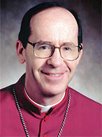
by Joshua R. LeBlanc
.PHOENIX, July 18, 2005 - The Catholic bishop of Phoenix, Arizona, quoted in the Arizona Republic, told a congregation attending the most recent priestly ordinations that the world has suffered with the loss of the religious observance of Sunday as a day of rest. The article, which appeared in the July 17th Sunday edition, posed the question, "Whatever happened to Sunday?" It reflects the observation of many Christians that the day which used to be reserved to religious and family togetherness, has turned into "an extension of Saturday," filled with errands invariably including shopping.
Bishop Olmsted of Phoenix said, "Keep the Lord's day holy. . . refrain from all shopping and enjoy Sunday as a day of rest, a day of leisure, a day for family, a day for celebrating the Eucharist."
The trend to the loss of the observance of Sunday is another feature of the general de-Christianizing of western culture since the end of the second world war. Some say it is one small symptom among others, but others see it as the thin edge of the wedge and one which may easily be reversed. According to a 2003 survey by the Bureau of Labor Statistics, as many as 33% of workers are at work on Sundays and holidays.
Steve Skojec, a married Catholic layman involved in the burgeoning Latin Mass community in Phoenix, says that his family as well as the other families involved in the traditional Catholic community take the Sunday religious and family observance as a serious part of their faith. Skojec, a realtor and father of two, told LifeSiteNews.com, that the observance of Sunday is worthwhile for its spiritual benefits. "For my wife and I, being in real estate, Sunday is a big money making day. But we feel, if we forego the ability to make money on Sunday, God will bless us."
The work of restoring Christian culture is one that interests many young Catholic and other Christian lay people. The leadership of Christian communities can help by encouraging the growth of genuine Christian social and political movements such as pro-life activity, a project at which the new bishop of Phoenix has excelled.
The diocese, which has recently made the Latin Mass much more available, has also encouraged other traditional Catholic measures to counter the secularizing trend. Bishop Olmstead recently welcomed five sisters from the same cloistered order of nuns as Mother Angelica of EWTN fame to his diocese. Fr. Frank Pavone of Priests For Life was also recently featured giving talks on the right to life in a Phoenix parish. Bishop Olmsted is also often seen protesting outside area abortion mills.
Skojec, 27, implied that the observance of Sunday, what Catholics refer to as the 'Sunday obligation' extends further than merely attending Church services. He said, "To us, if we forego the ability to make money on Sunday, God will bless us. In our minds, the avoidance of temporal gain on Sunday is rewarded with spiritual blessings."
.
Friday, July 15, 2005
Adoption firm: No Catholics
Catholicism "does not agree" with statement of faith, agency says
By Jean Gordon
jmgordon@clarionledger.com
A local Christian adoption agency that receives funds from the sale of Mississippi's Choose Life specialty car tags will not consider Catholics as adoptive parents.
"It has been our understanding that Catholicism does not agree with our Statement of Faith," wrote Bethany Christian Services director Karen Stewart in a July 8 letter to Sandy and Robert Stedman, a Catholic couple in Jackson seeking to adopt. "Our practice to not accept applications from Catholics was an effort to be good stewards of an adoptive applicant's time, money and emotional energy."
A private adoption agency, Bethany Christian Services has locations in 75 U.S. cities, including Jackson, Hattiesburg and Columbus.
The agency is one of 24 adoption and pregnancy counseling centers in the state that receives money from the sale of Choose Life car tags, which advocate against abortion.
Motorists pay an additional fee for the specialized license plate.
Of $244,000 generated by the sale of the tags in 2004, Bethany received $7,053, said Geraldine Gray, treasurer of Choose Life Mississippi, the umbrella group that distributes the money the tags raise to nonprofit groups.
"It is troubling to me if they are discriminating based on only the Catholics," Gray said.
Sandy Stedman, a 33-year-old neonatal nurse who had been trying to get pregnant for three years, said Stewart wrote her the letter after she called Bethany to inquire about the agency's policy toward Catholics.
"When I spoke to Karen Stewart, I said, 'I heard something I just cannot believe,' " Stedman said. "I asked, 'Do you accept Catholic applications?' and she said, 'No, we don't.' "
In a written response to The Clarion-Ledger's questions about the agency's policy toward prospective Catholic parents, Stewart did not answer the questions directly but wrote, "Bethany seeks to place children with (sic) who are emotionally, financially, socially and physically stable and who agree with the agency's Statement of Faith."
The Stedmans said they showed Bethany's statement of faith to their priest, who told them it did not conflict with Catholic teaching.
The statement is available at Bethany's Web site, www.bet hany.org.
"I have a feeling that the board has a little bit of that Deep South mentality about Catholics," Robert Stedman said.
Loria and Wes Williams, a Catholic couple in Ridgeland, had a similar experience with Bethany.
While going through fertility treatments, Loria Williams, 33, called Bethany in September 2004 because she and her husband decided also to pursue an adoption.
"When you go through infertility, you only have so much energy you can give certain things," she said, explaining she heard a rumor that Bethany didn't accept Catholic couples and wanted to confirm it before applying with the agency.
Like the Stedmans, she said she was told the agency didn't work with Catholics because they don't agree with Bethany's faith statement.
"I can't believe an agency that's nationwide would act like this," Williams said. "There was an agency who was Christian based but wasn't willing to help people across the board."
In Stewart's written statement to The Clarion-Ledger, she said Bethany's board will review its policy, but didn't specify which aspects of the policy will be addressed.
She wrote: "Recently, there have been many inquiries about our policy. When the Board of Directors meets for their regular bimonthly meeting, these inquiries will be addressed."
When Stedman learned Bethany Christian Services received funds from the Choose Life car tags, she said she was hurt and disappointed.
"I know of a lot of Catholics who get those tags," she said. "You're talking about something that goes through the Catholic faith — anti-abortion."
She added: "If it's OK to accept our money, it should be OK to open your home to us as a family."
Related Articles:
Statement of Faith
July 15, 2005
Statement of Faith
The Clarion-Ledger
Bethany Christian Services is founded upon the Scriptures which reveal the triune God. Members of the national board, local boards, staff and adoptive applicants indicate their personal agreement with Bethany's Statement of Faith by signing below.
I believe that the sovereign, triune God created the world out of nothing and sustains His creation. The heavens and earth are His handiwork. He made man and woman in His image and likeness as the crown of creation. All creation reflects His greatness and power.
I believe that God created the family, giving Adam and Eve the responsibility to conceive, bear and nurture children. As the creator of life, God Himself begins each human life at conception and gives to each person, as His image bearer, meaning, dignity and value.
I believe that sin entered the world when Adam and Eve disobeyed God and sought to be independent of Him. As a result of this Fall, all people are estranged from God and live in a world permeated by sin.
I believe that God, by His grace, provided redemption and restoration in Jesus Christ for all who repent and believe. As the Savior, Jesus takes away the sins of the world. Jesus is the one in whom we are called to put our hope, our only hope for forgiveness of sin and for reconciliation with God and with one another.
I believe that in all matters of faith and life, the Scriptures of the Old and New Testaments are the final authority. The Scriptures point us with full reliability to Jesus, God's Son. The Scriptures tell us that we receive forgiveness of sins by faith in Jesus Christ, and that God provides salvation by grace alone for those who repent and believe.
I believe that forgiveness comes through the sacrifice of Jesus Christ, God's Son, who was made flesh, took our place in death, rose from the dead, and is now in glory with the Father interceding and praying for His people.
I believe that God, through His Spirit, lovingly calls, redeems and adopts us into His family, the Church and that, in gratitude for God's saving love in Christ, we are called to live a life of faithfulness and obedience according to the scriptures.
I believe that Jesus, through His Spirit, is presently directing God's work of making all things new.
I believe that the Christian Church, as the community of believers, has an obligation to protect, preserve, and enhance life as fully as possible for each person, born and unborn, from the beginning to the end of life. As Christians we are called to a life of faith into an ongoing ministry until that mission is completed by the coming of the Kingdom in its fullness. The Holy Spirit empowers us to fulfill that calling.
I, along with all followers of Christ, believe and wait expectantly for the triumphant return of Jesus Christ our King. At that time, I believe that Jesus Christ will gather us to Himself as one complete family and will, throughout eternity, fully enhance the lives of His children as citizens of His kingdom, sons and daughters in our Father's house. As His children we long hopefully for that day to appear and we face that day without fear, for the Judge is our Savior and Lord. To Him be the glory.
Approved: September 15, 1987 Bethany Christian Services National Board
Revised & Approved: July 15, 2003 Bethany Christian Services National Board
Revised & Approved: January 18, 2005 Bethany Christian Services National Board
© 2005 Bethany Christian Services Privacy Statement
July 16, 2005
Bethany adoption policy scrutinized
Choose Life examines agency's refusal to weigh applications by Catholics
By Jean Gordon
jmgordon@clarionledger.com
The organization that parcels out proceeds raised from the sale of the state's Choose Life car tags has asked to review the policy of a private adoption agency after learning the group will not consider Catholics as adoptive parents.
"We are receiving information from Bethany for our board," said Geraldine Gray of Choose Life Mississippi. "We'll look at the information they forward to us to get a clearer understanding."
A local Catholic couple was told in a July 8 letter from the Jackson office of Bethany Christian Services in Mississippi that, "It has been our understanding that Catholicism does not agree with our statement of faith. ... Our practice to not accept applications from Catholics was an effort to be good stewards of an adoptive applicant's time, money and emotional energy."
Jackson, Hattiesburg and Columbus are among 75 U.S. cities in which Bethany is located. The agency, which is based in Grand Rapids, Mich., is one of 24 adoption and pregnancy counseling centers in the state that receives money from the sale of the specialty car tags, which advocate against abortion.
Of the $244,000 generated by the sale of the license plates in 2004, Bethany received $7,053. The agency did not return a phone call.
Motorists pay an additional fee of $31 for the specialized car tag.
Though the fee passes through state coffers, it is considered a private donation, said Kathy Waterbury of the Mississippi Tax Commission.
"They aren't public funds in that we are collecting money on behalf of the organization the tag represents," she said.
Nick Feduccia, a 23-year-old Catholic student, purchased his first Choose Life car tag in May. He said he was unaware proceeds would be given to a charity that would exclude a certain faith.
"I'm pro-life, and every child needs a good home," he said. "It's very disturbing to me that they would exclude people who believe what they believe."
The state issues 185 specialty license plates, which benefit organizations ranging from wildlife groups to Mississippi's colleges and universities.
Proceeds from the sale of Choose Life car tags go to the nonprofit organization Choose Life Mississippi. That agency then distributes funds to nonprofit organizations that have applied to receive a portion of the money.
Gray said any anti-abortion organization can apply for the funds by downloading a form from the group's Web site, www. mschoose-life.org.
The two-page application asks applicants to describe how they work with women who come in for pregnancy tests, how many women they refer for adoption and to verify the organization's nonprofit status.
"We've never denied anyone who applied," Gray said, explaining Choose Life Mississippi aims to support organizations that don't refer women to abortion providers. "What we're interested in is saving babies."
Choose Life Mississippi also supports the Morning Star Pregnancy Care Center located in Gulfport, an adoption and pregnancy resource center affiliated with the Catholic Diocese of Biloxi.
That agency received $9,306 in 2004 from the sale of Choose Life car tags.
As one of the programs of Catholic Social and Community Services, Morning Star doesn't discriminate in any of its services, said its director, Sister Rebecca Rutkowski.
"Catholic and Community Services is open to all faiths, Christian and non-Christian alike," Rutkowski said.
However, Rutkowski said the agency will honor a birth mother's decision if she specifies a particular religion for the adoptive parents.
Catholic Charities in Jackson, which runs an adoption program, also works with people of all faiths.
"Faith is not a criteria for being served by Catholic Charities' programs," said executive director Linda Raff.
Catholic Charities does not receive money from Choose Life Mississippi, but Raff said she will consider applying for the funds.
The sanctity of life is a major part of Catholic teaching, and many Catholics rally around pro-life causes.
"We have every need to support life in all of its forms," said the Rev. Alfred Camp, senior priest at St. Francis of Assisi Catholic Church in Madison. "From conception to going through the aging process."
Camp, whose car also sports a Choose Life license plate, said misconceptions about Catholicism obscure what all Christians share in common.
"The term Christian is for those who believe in Christ," he said. "That's the unifying element. Christ is the center of our faith." Estimates put the number of Catholics in the state between 70,000 and 116,000.
Rep. Joey Fillingane, R-Sumrall, who voted for the bill authorizing the Choose Life license plates, said he is "troubled" by Bethany's practice of not considering Catholics as adoptive parents. "I understand they are a private organization and we can't dictate who they let adopt," Fillingane said. "But I think it would be in their best interest to reconsider and repeal that exemption."
July 21, 2005
Adoption agency drops Catholic ban
Christian firm: View too narrow
By Jean Gordon
jmgordon@clarionledger.com
Brian Albert Broom/The Clarion-Ledger
Hoping to start a family, Sandy and Robert Stedman of Jackson said they were denied a chance at adoption through Bethany Christian Services in Mississippi because they are Catholic. The board unanimously voted to change its policy.
After being criticized for excluding Roman Catholics as adoptive parents, the board of Bethany Christian Services in Mississippi has voted unanimously to include Catholic families in adoption programs.
"In accepting applications for adoption, all Christians who are in agreement with our agency statement of faith are welcome applicants to the adoption process," wrote Bethany state director Karen Stewart and board president Peggy McKey in a statement Wednesday. "Bethany Christian Services of Mississippi regrets any pain caused to families, especially to our Catholic brothers and sisters in Christ."
The agency had not accepted Catholics as adoptive parents because it said Catholicism did not agree with its statement of faith. A Jackson couple, after being told they could not adopt, brought the issue to the forefront.
A private adoption agency, Bethany Christian Services has locations in 75 U.S. cities, including Jackson, Hattiesburg and Columbus. Bethany Christian Services in Mississippi, which began operating in the 1980s, places an average of 20 babies a year, Stewart said.
The agency will continue to stand on its faith, but "We realize that we took too narrow a view in assessing adoptive applicants," the statement said.
Bethany's national office in Grand Rapids, Mich., also issued a statement Wednesday affirming, "All families in agreement with the agency's Statement of Faith, including Catholic families, are eligible to adopt."
Bethany Christian Services is among the 24 adoption and pregnancy counseling centers in the state that receive money from the sale of Choose Life specialty car tag. The tag advocates against abortion.
Of the $244,000 generated by the sale of the license plates in 2004, Bethany received $7,053. Geraldine Gray of Choose Life Mississippi, the nonprofit agency that parcels out the proceeds from the sale of the tag, said her organization is pleased with Bethany's decision.
"It certainly seems the fair thing to do," she said.
After hearing the news, Sandy Stedman of Jackson said, "I really think God had his hand in this."
Stedman and her husband, Robert, a Catholic couple wishing to adopt, inquired about Bethany's policy earlier this month seeking clarification because they heard the agency was not inclusive. A Ridgeland couple has said they were rejected for the same reason last year.
In a letter from Stewart, they were told: "It has been our understanding that Catholicism does not agree with our statement of faith. ... Our practice to not accept applications from Catholics was an effort to be good stewards of an adoptive applicant's time, money and emotional energy."
Stedman said Bethany's change in policy is "a true testament to Christians working together to resolve an issue peacefully."
The numbers of Catholics seeking to adopt who have been turned away was unavailable. McKey said the agency's past policy of excluding Catholic parents was "unintentional on our part" as Bethany had assumed Catholic Charities gave preference to Catholic couples seeking to adopt.
But Catholic Charities of Jackson is an ecumenical organization that historically has served people of all faiths, said the Rev. Elvin Sunds, who directed the organization from 1978 to 1994 and is now vicar general for the Catholic Diocese of Jackson.
Between 40 to 50 couples apply to adopt annually at Bethany Christian Services in Mississippi. The wait time for a domestic adoption ranges from one to three years. The cost is on a sliding scale, from $6,000 to $17,000.
Stewart said there is no "typical birth mother" as Bethany Christian Services counsels women in Mississippi from age 11 to their early 40s. She said the women come from all racial, ethnic and socioeconomic backgrounds. Most women who choose adoption are 18 to 24 years old
Subscribe to:
Posts (Atom)
